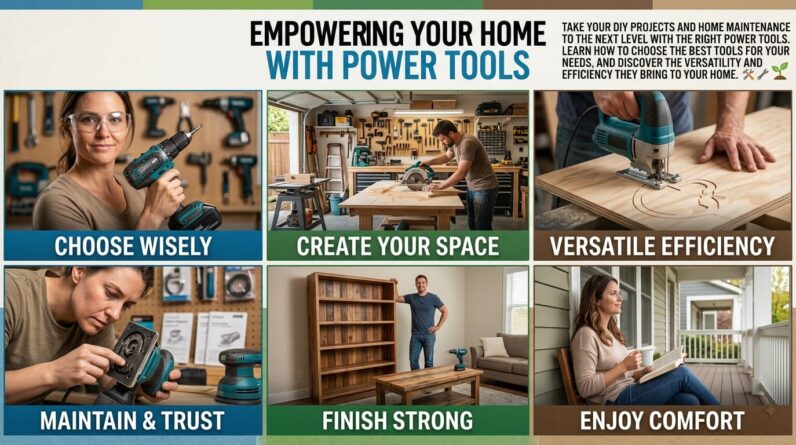
Must-Have Tools for Every Homeowner
Owning a home comes with countless responsibilities, and one of the smartest investments you can make is building a reliable collection of essential tools. Whether you’re hanging family photos, assembling furniture, fixing a leaky faucet, or tackling weekend DIY projects, having the right equipment can save both time and money. Instead of waiting for a professional to handle every small repair, homeowners with a well-stocked toolbox can confidently manage many everyday maintenance tasks on their own.
A thoughtfully chosen tool kit doesn’t need to be enormous or expensive. The goal is to own versatile, durable tools that handle the majority of common household jobs. From tightening loose cabinet handles to repairing fences and installing shelves, the right tools help prevent minor issues from turning into costly repairs. According to the U.S. Bureau of Labor Statistics, homeowners spend thousands of dollars annually on maintenance and repairs, making DIY skills and proper tools valuable long-term investments.
This guide explores the must-have tools for every homeowner, explains why each one matters, and offers practical advice for selecting quality equipment that will serve you for years.
Why Every Homeowner Needs a Basic Tool Kit
Every house requires regular maintenance. Nails loosen, screws back out, furniture needs assembly, and fixtures occasionally need adjustment. Without the proper tools, even simple tasks become frustrating and time-consuming.
A basic tool kit provides convenience, independence, and peace of mind. Instead of postponing repairs or paying service fees for minor fixes, you can address problems immediately. Small maintenance tasks completed early often prevent larger structural or mechanical issues later.
Beyond saving money, DIY projects can also be rewarding. Learning basic home repair skills builds confidence and helps homeowners better understand how their homes function. Over time, the cost of purchasing quality tools is often far less than repeatedly hiring professionals for simple repairs.
Essential Hand Tools
Hand tools form the foundation of every homeowner’s toolbox. These versatile tools require no electricity and are suitable for countless everyday repairs.
Pliers
If there’s one hand tool that quietly earns its place in every toolbox, it’s a dependable pair of pliers. Unlike tools designed for a single purpose, pliers are incredibly versatile. They can grip, twist, bend, pull, crimp, and even cut certain materials depending on the type you choose. Whether you’re fixing a loose wire, removing a stubborn nail, tightening a hose clamp, or holding a small part steady while working, pliers often become the extra hand you wish you had. Many homeowners underestimate their value until they’re faced with a task that simply can’t be completed using a screwdriver or wrench alone.
The most practical place to start is with a pair of slip-joint pliers, which feature an adjustable pivot that allows the jaws to open wider for larger objects. Needle-nose pliers are another must-have because their long, narrow jaws make it easy to reach into tight spaces behind appliances, inside electrical boxes, or around plumbing fixtures. If your budget allows, consider adding locking pliers, often called Vise-Grips, which clamp onto an object and stay locked in place without constant hand pressure. They are particularly useful for removing stripped bolts or holding materials securely during repairs.
When shopping for pliers, pay close attention to build quality. Models made from drop-forged chrome-vanadium steel offer excellent strength and resist rust over time. Comfortable, non-slip grips reduce hand fatigue during extended projects, especially if you’re applying significant pressure. Some pliers also include built-in wire cutters near the pivot, adding another layer of functionality. While inexpensive pliers may seem appealing, poorly machined jaws often fail to grip securely, making tasks more difficult and increasing the chance of slipping.
A homeowner will find countless uses for pliers throughout the year. They come in handy for replacing showerheads, repairing fences, adjusting garden equipment, assembling furniture, fixing bicycles, removing damaged fasteners, and countless other household jobs. Having two different sizes available can make larger projects much easier. In many situations, pliers solve problems that no other hand tool can, making them an essential investment for anyone who wants to confidently handle home maintenance.
Utility Knife
A utility knife is one of the simplest yet most valuable tools in any homeowner’s collection. Although it appears basic, its usefulness extends far beyond opening cardboard boxes. During home improvement projects, moving day, remodeling, or even routine maintenance, a sharp utility knife becomes indispensable. It slices through drywall, insulation, carpet, vinyl flooring, rope, plastic sheeting, packaging, caulk, and countless other materials with precision that scissors often cannot match.
Modern utility knives are designed with both convenience and safety in mind. Retractable blades allow you to expose only the amount of blade needed, significantly reducing the risk of accidental cuts. Folding utility knives provide additional portability while protecting the blade when stored. Many models also feature quick-change mechanisms that make replacing dull blades fast and tool-free. Since a dull blade requires more force and increases the likelihood of slipping, replacing blades regularly is actually a key safety practice rather than an unnecessary expense.
When selecting a utility knife, prioritize ergonomic comfort. A rubberized handle offers a more secure grip, especially when your hands are dusty or damp. Some premium models include blade storage inside the handle, ensuring replacements are always within reach. Others allow different blade styles for specialized cutting applications. Regardless of the model, investing in quality replacement blades is just as important as purchasing the knife itself.
Homeowners quickly discover that a utility knife becomes useful in unexpected situations. It can trim weatherstripping during door installation, score drywall before cutting, remove old caulk around sinks, open bags of mulch or cement, cut painter’s tape cleanly, and prepare materials for countless DIY projects. Because of its versatility, many experienced DIY enthusiasts keep one utility knife in the workshop and another inside the kitchen or household junk drawer for everyday tasks. It is an inexpensive tool that consistently proves its value, making it an absolute necessity for every homeowner.
Measuring and Leveling Tools
Tape Measure
Few mistakes in DIY projects are as frustrating—or as expensive—as inaccurate measurements. That’s why a tape measure is one of the first tools every homeowner should purchase. Whether you’re buying new furniture, planning a room renovation, hanging curtains, building shelves, or calculating flooring materials, precise measurements are the foundation of a successful project. The old saying “measure twice, cut once” remains one of the best pieces of advice in home improvement because a simple measuring error can lead to wasted materials, additional expenses, and unnecessary frustration.
A 25-foot tape measure is generally considered the ideal size for homeowners because it balances portability with sufficient length for measuring most rooms and construction materials. Look for a model with large, easy-to-read markings and a sturdy locking mechanism that keeps the blade securely extended during use. A wider blade is another valuable feature because it can extend farther without bending, making it easier to measure long distances without assistance. Magnetic hooks are increasingly popular, allowing the tape to securely attach to metal surfaces while measuring.
Many modern tape measures include useful reference markings that simplify framing, stud spacing, and common construction dimensions. Some premium models even feature double-sided printing, allowing measurements to remain visible regardless of orientation. Although digital measuring tools have become more common, traditional tape measures remain faster, more affordable, and dependable in nearly every situation. They require no batteries, withstand rough job-site conditions, and provide consistent accuracy.
Homeowners rely on tape measures far more often than they initially expect. Beyond construction projects, they’re useful for determining appliance dimensions, checking whether furniture will fit through doorways, measuring windows for blinds, estimating paint coverage, and planning landscaping improvements. Keeping a tape measure in an easily accessible location ensures you’re always prepared for unexpected projects. Despite its simplicity, this tool forms the backbone of nearly every successful DIY task because every project begins with accurate measurements.
Spirit Level
One of the easiest ways to make a home improvement project look unprofessional is to install something that isn’t level. A shelf that tilts slightly, a picture frame that leans to one side, or kitchen cabinets that don’t line up evenly can stand out every time you walk into the room. A spirit level, sometimes called a bubble level, eliminates this problem by helping you achieve perfectly horizontal and vertical alignments. Although it’s a simple tool, it has a major impact on the appearance and functionality of many DIY projects.
A spirit level contains liquid-filled vials with small air bubbles. When the bubble rests precisely between the marked lines, you know the surface is level or plumb, depending on which vial you’re using. Most homeowners find that a 24-inch level is the most versatile size because it’s long enough for shelves, countertops, and furniture while still being easy to store. A smaller torpedo level is also worth owning because it fits comfortably into tight spaces when working on plumbing, electrical installations, or compact shelving.
Quality matters when choosing a level. Durable aluminum frames resist bending and maintain accuracy over years of use, while shock-resistant end caps help protect the tool if it’s accidentally dropped. Some modern levels include magnetic edges that securely attach to metal surfaces, making them especially useful when installing steel framing or working with HVAC systems. Digital levels are also available and provide exact angle measurements, though traditional bubble levels remain more affordable and perfectly adequate for most homeowners.
You’ll likely use a spirit level more often than expected. It’s invaluable for hanging artwork, mounting televisions, installing cabinets, building decks, assembling furniture, laying tile, setting fence posts, and positioning washing machines to prevent excessive vibration. Taking an extra minute to verify that everything is level can dramatically improve the finished appearance of any project. Rather than relying on your eyes—which can easily be fooled—a spirit level provides objective accuracy that gives your DIY work a polished, professional finish.
Stud Finder
Many homeowners have experienced the frustration of hanging a heavy shelf or television, only to discover that the screws are anchored only in drywall instead of solid wood framing. Drywall alone isn’t designed to support significant weight, which is why a stud finder has become one of the most valuable measuring tools available. By identifying the location of wooden or metal studs hidden behind walls, this simple device helps ensure that shelves, cabinets, mirrors, and televisions are mounted securely and safely.
Electronic stud finders work by detecting changes in wall density, allowing them to accurately identify framing members hidden behind drywall. More advanced models can also detect live electrical wiring and metal pipes, reducing the risk of drilling into dangerous areas. Magnetic stud finders offer a simpler alternative by locating the screws or nails attached to studs, making them reliable without requiring batteries. Both types are effective, although electronic models typically provide greater precision for larger projects.
Choosing a quality stud finder can save both time and costly mistakes. Look for a model with a clear display, audible alerts, and multiple scanning modes for different wall materials. Some units even indicate the center of the stud rather than just the edges, making it easier to position fasteners accurately. Before drilling, it’s always wise to verify stud locations by scanning the wall multiple times from different directions to confirm consistent results.
The practical applications of a stud finder extend far beyond mounting televisions. Homeowners use them when installing floating shelves, heavy mirrors, curtain rods, garage storage systems, cabinets, grab bars in bathrooms, and decorative wall features. Properly securing these items to structural framing not only protects your walls but also improves safety for everyone in the home. Considering the relatively low cost of a stud finder compared to repairing damaged drywall or replacing fallen fixtures, it’s an investment that quickly pays for itself.
Power Tools Worth Owning
Cordless Drill/Driver
If there is one power tool that deserves a permanent place in every homeowner’s workshop, it is the cordless drill/driver. Few tools offer the same combination of versatility, convenience, and efficiency. From assembling flat-pack furniture and installing shelves to drilling pilot holes, mounting curtain rods, and tightening loose hardware, a cordless drill dramatically reduces the time and effort required for everyday household tasks. What might take an hour with a manual screwdriver can often be completed in just a few minutes using a quality drill.
Modern cordless drills are powered by lithium-ion batteries, which provide longer run times, faster charging, and more consistent power than older battery technologies. For most homeowners, an 18V or 20V drill delivers the ideal balance of power and portability. Adjustable clutch settings help prevent overdriving screws, reducing the risk of damaging wood, drywall, or fasteners. Variable-speed triggers offer greater control when switching between delicate work and heavy-duty drilling, while integrated LED lights improve visibility inside cabinets, closets, and dimly lit workspaces.
When purchasing a cordless drill, don’t focus solely on the drill itself. Battery compatibility across an entire tool platform can save significant money in the future. Many manufacturers offer systems where a single battery powers drills, impact drivers, saws, sanders, leaf blowers, and other tools. Investing in a reputable battery platform allows your collection to expand over time without purchasing duplicate chargers and batteries. Brushless motors are another worthwhile upgrade because they generally run cooler, require less maintenance, and often deliver longer battery life than brushed alternatives.
The list of projects made easier by a cordless drill is nearly endless. It simplifies furniture assembly, cabinet installation, deck repairs, fence construction, light fixture mounting, drywall anchor installation, and even simple craft projects. With the addition of specialized attachments, a drill can also mix paint, polish surfaces, scrub tile, or drill through masonry. For homeowners interested in DIY repairs and improvements, a cordless drill isn’t merely convenient—it’s the foundation upon which almost every successful project is built.
Circular Saw
For homeowners who plan to tackle projects beyond basic repairs, a circular saw is one of the most valuable additions to a workshop. While a cordless drill handles fastening and drilling, a circular saw provides the cutting power needed for woodworking and remodeling tasks. Whether you’re building shelves, repairing a fence, constructing raised garden beds, replacing damaged decking, or cutting plywood for custom storage solutions, this tool delivers fast, straight cuts that would be difficult and time-consuming with a handsaw.
Modern circular saws are available in both corded and cordless models. Corded versions provide continuous power and are well suited for lengthy cutting sessions, while cordless models offer exceptional portability for outdoor projects or locations without convenient electrical outlets. Most homeowners find that a 7¼-inch blade offers the best balance between cutting capacity and ease of use, making it capable of handling dimensional lumber, plywood, MDF, and many other common building materials.
Safety should always be the top priority when operating a circular saw. Before making any cut, inspect the blade for damage, verify that the lower blade guard moves freely, and secure the workpiece using clamps whenever possible. Wearing safety glasses, hearing protection, and a dust mask helps protect against flying debris and sawdust. It’s equally important to allow the blade to reach full speed before beginning the cut and to avoid forcing the saw through the material. Letting the blade do the work results in smoother cuts and reduces strain on the motor.
Selecting the right blade also has a noticeable impact on performance. Framing blades with fewer teeth cut quickly through construction lumber, while fine-tooth blades produce cleaner cuts in plywood and finished materials. Carbide-tipped blades generally stay sharp much longer than standard steel blades, making them a worthwhile investment for frequent DIY users. With proper care and safe operating practices, a circular saw becomes an indispensable tool for homeowners who enjoy building, repairing, and improving their homes.
Oscillating Multi-Tool
Few power tools have gained popularity as quickly as the oscillating multi-tool, and it’s easy to understand why. Rather than spinning like a drill or circular saw, this tool moves its accessory back and forth at incredibly high speed over a very small angle. That unique motion allows it to make precise cuts, sand difficult corners, scrape away old adhesive, remove grout, trim door casings, and perform dozens of specialized tasks that would otherwise require several separate tools. Its versatility has earned it a permanent place in many professional contractors’ toolboxes.
One of the greatest advantages of an oscillating multi-tool is its ability to work in tight, confined spaces. When installing new flooring, for example, the tool can trim the bottom of door frames so flooring slides neatly underneath for a professional appearance. During bathroom renovations, it easily removes grout between tiles without damaging surrounding surfaces. It can also cut drywall for electrical boxes, trim PVC pipe, remove old caulk, scrape paint, and sand intricate moldings that are difficult to reach with larger sanders.
Most modern oscillating tools feature tool-free accessory changes, making it quick to switch between blades, sanding pads, scrapers, and grout-removal attachments. Variable speed settings allow homeowners to match the tool’s performance to different materials, reducing the risk of damaging delicate surfaces. While accessories are sold separately in many cases, investing in a quality starter kit provides excellent value because it prepares you for a wide variety of repair and renovation projects.
Although an oscillating multi-tool may not be the first power tool a homeowner purchases, it often becomes one of the most frequently used once it’s available. Its precision makes it especially valuable for repair work where replacing large sections of material isn’t practical. Instead of struggling with oversized saws or improvised solutions, homeowners can complete detailed work with greater control and cleaner results. For anyone interested in remodeling or tackling more advanced DIY projects, this compact yet capable tool is a worthwhile investment that consistently proves its value.
Safety Equipment Every Homeowner Should Have
Safety Glasses and Gloves
Owning quality tools is important, but using them safely is even more critical. Every year, thousands of DIY enthusiasts suffer injuries that could have been prevented with basic protective equipment. Even a simple task like drilling into a wall or cutting a piece of wood can send dust, splinters, or small metal fragments flying through the air. That’s why safety glasses and work gloves should never be considered optional—they’re essential items for every homeowner.
Safety glasses protect one of your most valuable assets: your eyesight. Unlike ordinary prescription glasses or sunglasses, safety glasses are designed to withstand impacts from flying debris. Look for models that meet recognized safety standards, such as ANSI Z87.1 certification in the United States. Clear lenses are suitable for most indoor projects, while tinted versions can reduce glare when working outdoors. Anti-fog coatings are another useful feature, particularly when working in humid conditions or while wearing a dust mask.
Work gloves provide protection against cuts, abrasions, blisters, and splinters while also improving grip on tools and materials. Different projects require different types of gloves. Lightweight synthetic gloves offer flexibility for detailed work, while leather gloves are excellent for handling rough lumber, bricks, or landscaping materials. Cut-resistant gloves are especially valuable when working with utility knives, sheet metal, or glass. Choosing gloves that fit properly is important because oversized gloves can reduce dexterity and make it harder to safely control tools.
Developing the habit of wearing protective equipment before starting any project can prevent painful injuries and expensive medical bills. Even quick tasks that seem harmless can become dangerous if something unexpected happens. A slipping screwdriver, a shattered drill bit, or a flying wood chip can cause serious harm in an instant. Investing in quality safety glasses and gloves costs very little compared to the protection they provide, making them two of the smartest purchases any homeowner can make.
Hearing Protection
Many homeowners don’t realize how quickly loud noises can damage hearing. Power tools such as circular saws, angle grinders, lawn mowers, leaf blowers, and even some drills can produce sound levels well above the threshold considered safe for prolonged exposure. Hearing loss often develops gradually, meaning you may not notice the damage until it’s permanent. Using hearing protection is one of the simplest ways to preserve your hearing while enjoying DIY projects for years to come.
There are two primary types of hearing protection: foam earplugs and earmuffs. Foam earplugs are inexpensive, lightweight, and easy to carry in a toolbox or pocket. When inserted correctly, they provide excellent noise reduction while remaining comfortable during extended use. Earmuffs, on the other hand, are quicker to put on and remove, making them convenient for projects where you frequently switch between noisy and quiet tasks. Some premium models even include Bluetooth connectivity, allowing users to listen to music or take calls while maintaining hearing protection.
When selecting hearing protection, pay attention to the Noise Reduction Rating (NRR). A higher NRR generally indicates greater protection from loud sounds. For particularly noisy equipment, some professionals wear both earplugs and earmuffs simultaneously to maximize protection. Regardless of the method you choose, the goal is to reduce noise exposure without completely eliminating your awareness of the surrounding environment.
Protecting your hearing should become as routine as wearing safety glasses. Once hearing is damaged, it cannot usually be restored. Making hearing protection part of your regular DIY routine helps ensure that enjoyable home improvement projects don’t come at the expense of your long-term health. It’s a small investment that provides lifelong benefits and contributes to a safer, more comfortable working environment.
Fire Extinguisher
A fire extinguisher may not be the first item that comes to mind when building a homeowner’s toolkit, but it is undoubtedly one of the most important. Fires can start unexpectedly from electrical faults, cooking accidents, overloaded outlets, flammable liquids, or workshop activities involving sparks and heat. Having a properly maintained fire extinguisher readily available can mean the difference between containing a small incident and facing devastating property damage.
For most homes, an ABC-rated fire extinguisher is the best choice because it is designed to handle the three most common types of household fires. Class A covers ordinary combustibles such as wood, paper, and fabric. Class B is intended for flammable liquids like gasoline and paint thinner. Class C is suitable for energized electrical equipment. This versatility makes ABC extinguishers ideal for kitchens, garages, workshops, and utility rooms where different fire hazards may exist.
Owning a fire extinguisher is only part of the equation—you should also know how to use it. The widely recognized PASS method provides an easy way to remember the correct procedure:
- Pull the safety pin.
- Aim the nozzle at the base of the fire.
- Squeeze the handle.
- Sweep the nozzle from side to side until the flames are extinguished.
Fire extinguishers should be inspected regularly to ensure the pressure gauge remains in the recommended range and that there is no visible damage or corrosion. They should also be mounted in accessible locations where everyone in the household knows how to reach them quickly. While an extinguisher is effective for controlling small fires, homeowners should never hesitate to evacuate and call emergency services if a fire grows beyond their ability to control it safely.
Organizing and Maintaining Your Tool Collection
Purchasing quality tools is only half the battle. Keeping them organized, clean, and in good working condition ensures they’ll be ready whenever a repair or DIY project arises. There’s nothing more frustrating than knowing you own the right tool but spending twenty minutes searching through cluttered drawers or garage shelves to find it. An organized tool collection not only saves time but also improves safety by reducing the chance of tripping over misplaced equipment or accidentally damaging expensive tools.
A sturdy toolbox, rolling tool chest, or wall-mounted pegboard provides an excellent foundation for organization. Smaller homeowners may prefer a compact portable toolbox for everyday essentials, while those with garages or dedicated workshops often benefit from larger storage cabinets with labeled drawers. Pegboards are particularly useful because they keep frequently used tools visible and within easy reach. Hanging hammers, pliers, screwdrivers, and measuring tapes on wall hooks also frees up valuable drawer space for smaller accessories like screws, nails, drill bits, and fasteners.
Proper maintenance significantly extends the lifespan of your tools. After each project, wipe away dust, dirt, sawdust, and moisture before returning tools to storage. Metal tools should be lightly coated with machine oil or a rust-prevention spray if they are stored in humid environments. Keep cutting tools such as utility knives, chisels, and saw blades sharp because dull edges require more force and increase the risk of accidents. Battery-powered tools deserve special attention as well. Store lithium-ion batteries in a cool, dry place, avoid exposing them to extreme temperatures, and follow the manufacturer’s charging recommendations to maximize battery life.
Creating a simple inventory of your tools can also be helpful, especially as your collection grows. Labeling storage bins, organizing hardware by size, and replacing worn-out accessories before they fail will make every future project smoother and more enjoyable. A well-maintained tool collection reflects good craftsmanship and ensures that when something needs repairing, you can focus on the task instead of searching for equipment. With just a little routine care, quality tools can continue serving your household reliably for decades.
How to Choose Quality Tools Without Overspending
Building a homeowner’s toolkit doesn’t have to strain your budget. In fact, one of the biggest mistakes beginners make is assuming they need to purchase every premium tool available. While high-end professional equipment offers impressive durability and advanced features, many homeowners only use certain tools occasionally. The key is finding the right balance between quality, performance, and price so you invest wisely without sacrificing reliability.
Start by identifying the tools you’ll use most frequently. Items such as a hammer, screwdriver set, tape measure, adjustable wrench, and cordless drill deserve a larger share of your budget because they’ll see regular use. For specialty tools that may only be used once or twice a year, a well-reviewed mid-range model is often more than sufficient. Reading customer reviews, checking warranty coverage, and comparing materials such as chrome-vanadium steel or brushless motors can help separate durable products from inexpensive tools that wear out quickly.
Another smart strategy is purchasing combo kits, especially for cordless power tools. Many manufacturers sell packages that include a drill, impact driver, batteries, charger, and carrying case at a significantly lower price than buying each item separately. Choosing a single battery platform also saves money over time because the same batteries can power additional tools from the same brand. This approach makes it easy to expand your collection gradually as your DIY skills and project needs grow.
It’s also worth watching for seasonal promotions at hardware stores, particularly around major holidays when tool discounts are common. However, avoid buying tools simply because they’re on sale. Focus on purchasing equipment that fills a genuine need in your workshop. A smaller collection of dependable, high-quality tools will serve you far better than a garage full of inexpensive tools that fail when you need them most. By making thoughtful purchasing decisions, homeowners can build an impressive toolkit over time without overspending or compromising on performance.
Common DIY Projects You Can Complete With These Tools
Once you’ve assembled a solid collection of essential hand tools, measuring equipment, power tools, and safety gear, you’ll be prepared to tackle a surprising variety of home improvement projects. Many routine repairs that once required hiring a professional can now be completed confidently over a weekend, saving money while building valuable skills. Each successful project also increases your familiarity with your home, making future maintenance tasks less intimidating.
Here are some common DIY projects and the primary tools required:
| Project | Main Tools Needed | Difficulty |
|---|---|---|
| Hang picture frames | Hammer, tape measure, spirit level | Easy |
| Assemble furniture | Screwdriver set, cordless drill | Easy |
| Install floating shelves | Stud finder, drill, level | Moderate |
| Replace cabinet hardware | Screwdrivers, pliers | Easy |
| Install curtain rods | Drill, tape measure, level | Easy |
| Repair a loose fence panel | Hammer, drill, circular saw | Moderate |
| Build garage storage shelves | Circular saw, drill, tape measure | Moderate |
| Replace door handles and locks | Screwdrivers, adjustable wrench | Easy |
| Repair damaged trim | Utility knife, hammer, saw | Moderate |
| Build raised garden beds | Circular saw, drill, measuring tools | Moderate |
These projects not only improve the appearance and functionality of your home but also provide a strong sense of accomplishment. As your confidence grows, you may choose to take on larger renovations such as installing flooring, updating kitchen cabinets, or constructing outdoor furniture. Every completed project expands your skills and reinforces the value of owning the right tools.
The beauty of DIY home maintenance lies in continuous learning. No homeowner begins as an expert, but with patience, practice, and a dependable toolkit, even complex repairs become manageable over time. Investing in quality tools today equips you to handle tomorrow’s challenges with confidence while reducing long-term maintenance costs and increasing the value of your home.
Conclusion
Every home, regardless of its size or age, requires regular care and maintenance. From tightening a loose cabinet hinge to building custom storage shelves, the right tools make these tasks easier, safer, and more cost-effective. A thoughtfully assembled toolkit isn’t just a collection of equipment—it’s an investment in your home’s longevity and your ability to solve everyday problems without immediately calling a professional. Over time, the savings from handling routine repairs yourself can easily outweigh the initial cost of purchasing quality tools.
The best approach is to start with the essentials and expand your collection as your confidence and experience grow. Reliable hand tools such as a hammer, screwdriver set, adjustable wrench, pliers, and utility knife form the backbone of every homeowner’s toolkit. Measuring tools like a tape measure, spirit level, and stud finder help ensure accuracy, while power tools such as a cordless drill, circular saw, and oscillating multi-tool allow you to complete larger projects efficiently. Equally important is investing in proper safety equipment, including safety glasses, gloves, hearing protection, and a fire extinguisher, because no DIY project is worth risking your health or safety.
Organization and maintenance also play a significant role in getting the most from your investment. Storing tools properly, cleaning them after use, replacing worn blades, and caring for batteries will keep your equipment in excellent condition for years. Rather than purchasing every tool at once, prioritize the ones you’ll use most often and choose dependable products from reputable manufacturers. A smaller collection of durable tools is far more valuable than a large assortment of low-quality equipment that doesn’t perform reliably.
Homeownership inevitably brings unexpected repairs and improvement opportunities. With the essential tools covered in this guide, you’ll be prepared to tackle many of those challenges confidently. Whether you’re completing a quick five-minute repair or embarking on a major weekend project, having the right tools at your fingertips transforms home maintenance from a stressful obligation into a rewarding skill that benefits both your property and your wallet.
FAQs
1. What are the most essential tools every new homeowner should buy first?
Every new homeowner should begin with a claw hammer, screwdriver set, adjustable wrench, pliers, utility knife, tape measure, spirit level, cordless drill, and safety glasses. These tools are versatile enough to handle the majority of common household repairs and maintenance tasks.
2. Is it better to buy individual tools or a complete tool kit?
A quality starter tool kit is an excellent option for beginners because it typically includes the most commonly used hand tools at a lower overall cost. As your DIY skills develop, you can gradually replace heavily used tools with higher-quality versions and add specialized equipment as needed.
3. How often should homeowner tools be maintained?
Basic maintenance should be performed after every use. Clean away dirt and moisture, inspect for damage, sharpen cutting tools when necessary, lightly oil metal parts to prevent rust, and store everything in a dry, organized location. Power tool batteries should also be charged and stored according to the manufacturer’s recommendations.
4. Which cordless drill voltage is best for homeowners?
For most homeowners, an 18V or 20V cordless drill offers the ideal balance of power, battery life, and portability. These drills are capable of handling furniture assembly, drilling into wood and metal, installing shelves, and completing the majority of home improvement projects without being overly heavy.
5. What safety equipment should always be used during DIY projects?
At a minimum, homeowners should wear ANSI-rated safety glasses, durable work gloves, and hearing protection whenever using power tools. Depending on the project, additional equipment such as a dust mask or respirator, steel-toe boots, and knee pads may also be appropriate. Every home should also have at least one ABC-rated fire extinguisher in an easily accessible location.