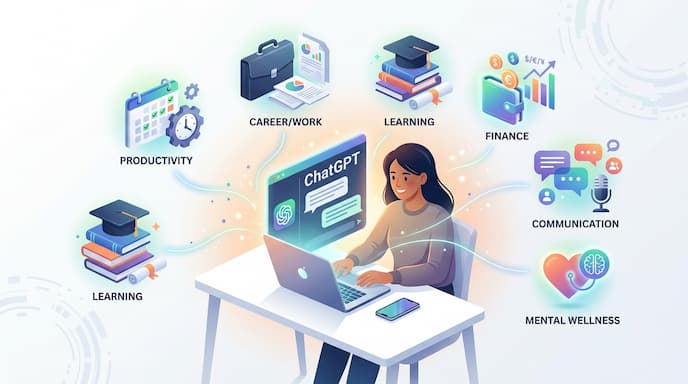
Understanding ChatGPT and Its Real-World Potential
ChatGPT isn’t just another tech trend floating around the internet—it’s quickly becoming a practical companion for handling everyday challenges. Think of it less like a search engine and more like a conversation partner who can help you think through problems, organize your thoughts, and even suggest actionable solutions. The real power of ChatGPT lies in how it adapts to your needs. Whether you’re trying to plan your week, write an important email, or figure out your next career move, it acts like a flexible tool that molds itself around your situation.
What makes this especially interesting is how accessible it is. You don’t need technical expertise or coding knowledge to use it effectively. You just type in your problem in plain language—almost like texting a friend—and get responses that feel tailored and thoughtful. That simplicity is what makes it so powerful for real-life use. It removes friction, and when something is easy to use, you’re far more likely to actually use it consistently.
Another key advantage is speed. In situations where you’d normally spend hours researching or overthinking, ChatGPT can give you a starting point in seconds. It doesn’t replace your judgment, but it significantly reduces the mental load. You can refine ideas, ask follow-up questions, and explore multiple angles without feeling stuck.
At its core, ChatGPT shines because it helps you think better, not just faster. It acts like a brainstorming partner, an assistant, and sometimes even a coach. When used correctly, it can transform how you approach everyday problems—turning confusion into clarity and hesitation into action.
What Makes ChatGPT Different from Traditional Tools
Traditional tools like Google or productivity apps are designed to give you answers or help you organize information. ChatGPT, on the other hand, goes a step further by helping you interact with information dynamically. Instead of just showing you links or static suggestions, it engages in a back-and-forth conversation that evolves based on your input.
Imagine you’re trying to solve a problem at work. A search engine might give you general advice, but ChatGPT allows you to explain your exact situation—your constraints, your goals, your concerns—and then tailors its response accordingly. This level of personalization is what sets it apart. It feels less like using a tool and more like having a collaborative partner.
Another big difference is how it handles complexity. Real-life problems are rarely straightforward. They come with emotional, practical, and sometimes unpredictable elements. ChatGPT can break down complicated issues into manageable steps, making them easier to tackle. It’s like having someone sit with you and say, “Let’s figure this out together.”
It also excels at iteration. You’re not stuck with a single answer—you can refine, tweak, and expand your queries. This makes it incredibly useful for problem-solving because solutions often require multiple attempts and perspectives.
Why People Are Turning to AI for Everyday Solutions
There’s a reason why more people are integrating AI into their daily lives—it simply makes things easier. In a world where time feels limited and decisions feel overwhelming, tools like ChatGPT provide a sense of clarity and direction. People aren’t just using it for convenience; they’re using it to reduce stress and improve decision-making.
One major factor driving this shift is the increasing complexity of modern life. From managing finances to balancing work and personal responsibilities, people are juggling more than ever. ChatGPT acts as a support system, helping users break down problems and approach them logically.
There’s also an element of accessibility. Not everyone has access to mentors, coaches, or experts in every field. ChatGPT bridges that gap by offering guidance that feels personalized and immediate. It democratizes knowledge in a way that wasn’t possible before.
And then there’s the confidence factor. When you have a tool that helps you think through decisions and explore options, you feel more in control. You’re not just reacting to problems—you’re proactively solving them. That shift in mindset can make a huge difference in both personal and professional life.
Using ChatGPT for Personal Productivity
Personal productivity isn’t just about getting more done—it’s about getting the right things done without feeling overwhelmed. This is where ChatGPT becomes surprisingly powerful. Instead of juggling multiple apps, planners, and mental checklists, you can use it as a central hub to organize your thoughts and tasks. It’s like having a personal assistant who’s available 24/7, ready to help you make sense of your day.
One of the most practical ways to use ChatGPT is for structuring your daily routine. You can tell it your goals, your available time, and even your energy levels throughout the day. Based on that, it can suggest a realistic plan that actually fits your lifestyle. This is important because most productivity advice fails when it ignores individuality. ChatGPT adapts to you, not the other way around.
Another benefit is how it helps reduce decision fatigue. Small decisions—what to prioritize, when to take breaks, how to structure your tasks—can add up and drain your energy. ChatGPT can simplify those choices by giving you clear, actionable suggestions. It doesn’t just tell you what to do; it helps you understand why a certain approach might work better.
It also works as a reflection tool. At the end of the day, you can review what you accomplished, what didn’t work, and what you want to improve. This kind of feedback loop is essential for long-term productivity, and ChatGPT makes it easy to maintain.
Time Management and Daily Planning
Time management is one of those things everyone struggles with, yet very few people master. ChatGPT can act like a personal time strategist, helping you allocate your hours more effectively. Instead of relying on rigid schedules, you can create flexible plans that adapt to real-life unpredictability.
For example, you can ask ChatGPT to build a daily schedule based on your priorities. But it doesn’t stop there—you can refine it. Maybe you realize you’re more productive in the morning or that you need longer breaks in the afternoon. ChatGPT can adjust your plan accordingly, making it more realistic and sustainable.
It’s also incredibly useful for breaking down large tasks. Big projects often feel overwhelming because they lack clear starting points. ChatGPT can divide them into smaller, manageable steps, making it easier to take action. This alone can significantly reduce procrastination.
Another powerful feature is scenario planning. You can ask, “What should I do if I only have two hours today?” or “How can I catch up if I fall behind?” This kind of flexibility is what makes ChatGPT stand out as a productivity tool.
Goal Setting and Habit Building
Setting goals is easy—sticking to them is the hard part. ChatGPT helps bridge that gap by turning abstract goals into concrete action plans. Instead of saying, “I want to get fit,” you can create a step-by-step strategy that includes specific actions, timelines, and milestones.
What makes this effective is the level of personalization. You can factor in your current habits, your challenges, and even your motivation levels. ChatGPT doesn’t just give you a generic plan; it creates something that feels achievable.
Habit building becomes much easier when you have structure and accountability. You can use ChatGPT to track your progress, adjust your approach, and stay consistent. It’s like having a coach who checks in with you regularly.
It also helps with mindset. Sometimes the biggest barrier to achieving goals isn’t the plan—it’s self-doubt or lack of clarity. ChatGPT can provide encouragement, perspective, and practical advice that keeps you moving forward.
Solving Work and Career Challenges
Work-related problems can feel like a maze with no clear exit, especially when expectations are high and time is limited. This is where ChatGPT becomes a practical thinking partner, not just a writing assistant. Instead of staring at a blank screen or overthinking your next move, you can describe your situation in detail and get structured guidance almost instantly. Whether you’re dealing with workplace communication, project planning, or career uncertainty, ChatGPT helps you move from confusion to clarity.
One of the biggest advantages here is perspective. When you’re deeply involved in a problem, it’s easy to miss alternative approaches. ChatGPT can suggest angles you hadn’t considered, helping you evaluate options more objectively. It’s like having a colleague who’s always available to brainstorm, without the pressure of judgment or office politics.
It also helps you prepare rather than react. Instead of scrambling to respond to challenges, you can proactively plan your actions. From drafting responses to mapping out long-term career strategies, ChatGPT allows you to think ahead. That shift—from reactive to proactive—can significantly improve your confidence and performance at work.
Writing Emails, Reports, and Proposals
Professional communication often determines how seriously you’re taken in the workplace. A poorly written email can create confusion, while a well-crafted one can build credibility and trust. ChatGPT excels at helping you refine your communication style so your message is clear, concise, and impactful.
You can start by giving it a rough draft or even just bullet points. ChatGPT will transform that into a polished email or report, adjusting tone and structure based on your needs. Want it to sound formal? Done. Prefer a friendly yet professional tone? It can do that too. This flexibility is incredibly useful when you’re dealing with different audiences—managers, clients, or teammates.
It also helps you avoid common pitfalls like over-explaining or sounding too abrupt. By refining your wording, ChatGPT ensures your message lands the way you intend. Over time, you’ll start to internalize these improvements, making you a stronger communicator even without assistance.
For longer documents like proposals, ChatGPT can help you structure your ideas logically. It can suggest sections, improve flow, and even highlight areas that need more detail. This makes the writing process less intimidating and far more efficient.
Preparing for Interviews and Career Growth
Job interviews can feel like high-stakes performances, and preparation is everything. ChatGPT can simulate interview scenarios, giving you practice questions tailored to your industry and role. This kind of rehearsal helps you articulate your thoughts more clearly and confidently when it matters most.
You can also use it to refine your answers. For example, if you’re struggling to explain your strengths or past experiences, ChatGPT can help you frame them in a compelling way. It ensures your responses are not just accurate but also engaging and memorable.
Beyond interviews, ChatGPT is valuable for long-term career planning. You can explore potential career paths, identify skill gaps, and create a roadmap for growth. It’s like having a career advisor who’s always available to guide you.
It even helps with networking. Not sure how to reach out to someone on LinkedIn? ChatGPT can draft a message that feels authentic and professional. These small improvements can have a big impact on your career trajectory over time.
Improving Learning and Education
Learning doesn’t have to be slow or frustrating. With ChatGPT, it becomes more interactive and personalized. Instead of passively consuming information, you actively engage with it—asking questions, exploring concepts, and testing your understanding in real time.
This is especially helpful when dealing with complex topics. Instead of getting stuck, you can ask ChatGPT to break things down into simpler terms or provide examples that make the concept easier to grasp. It adapts to your level of understanding, which makes learning far more efficient.
Another advantage is accessibility. You don’t need expensive courses or tutors to get quality explanations. ChatGPT provides guidance that feels tailored to your needs, making education more inclusive and flexible.
Studying Smarter with AI Assistance
Studying isn’t just about putting in hours—it’s about using those hours effectively. ChatGPT helps you optimize your study process by creating structured plans and providing targeted explanations. Instead of randomly reviewing material, you can focus on what actually matters.
For example, you can ask ChatGPT to summarize chapters, generate practice questions, or explain difficult concepts in multiple ways. This variety keeps your study sessions engaging and prevents burnout. It’s like having a tutor who adjusts their teaching style based on your preferences.
It also helps with retention. By interacting with the material—asking questions and testing your knowledge—you reinforce what you’ve learned. This active approach is far more effective than passive reading.
Another useful feature is time management. ChatGPT can help you create a study schedule that balances different subjects and avoids overload. This ensures you stay consistent without feeling overwhelmed.
Learning New Skills Faster
In today’s fast-paced world, the ability to learn quickly is a major advantage. ChatGPT accelerates this process by providing step-by-step guidance and instant feedback. Whether you’re learning a new language, coding, or a creative skill, it acts as a supportive guide.
You can start from scratch and gradually build your knowledge. ChatGPT can recommend resources, create practice exercises, and even evaluate your progress. This structured approach makes learning less intimidating and more achievable.
It also encourages experimentation. You can try different methods, ask “what if” questions, and explore alternative approaches without fear of failure. This freedom makes the learning process more enjoyable and effective.
Over time, you’ll notice that you’re not just learning faster—you’re learning smarter. You’re focusing on what works best for you, which leads to better results.
Managing Finances and Budgeting
Money management is one of those areas where small improvements can lead to big results. ChatGPT helps you gain control over your finances by simplifying complex decisions and providing clear guidance. Instead of feeling overwhelmed by numbers, you can approach your finances with confidence.
You can start by outlining your income, expenses, and financial goals. ChatGPT can then help you create a budget that aligns with your lifestyle. This personalized approach makes it easier to stick to your plan.
It also helps you understand your spending habits. By analyzing your expenses, ChatGPT can identify patterns and suggest areas for improvement. This awareness is the first step toward better financial health.
Creating Budgets and Tracking Expenses
Budgeting doesn’t have to be restrictive—it’s about making your money work for you. ChatGPT can help you design a budget that balances your needs and wants, ensuring you don’t feel deprived.
You can break down your expenses into categories and set realistic limits. ChatGPT can suggest adjustments based on your goals, whether it’s saving for a trip or paying off debt. This flexibility makes budgeting more sustainable.
Tracking expenses becomes easier when you have a clear system. ChatGPT can recommend methods and tools that suit your preferences, making it easier to stay consistent.
Financial Decision-Making with AI Insights
Big financial decisions can be intimidating, but ChatGPT helps you approach them logically. Whether you’re considering an investment or a major purchase, it can outline the pros and cons, helping you make informed choices.
It doesn’t replace professional advice, but it gives you a solid starting point. You can explore different scenarios and understand potential outcomes before making a decision.
Enhancing Communication and Relationships
Human relationships are complex, messy, and often misunderstood—not because people don’t care, but because communication breaks down in subtle ways. This is where ChatGPT becomes an unexpected but powerful ally. It doesn’t replace real human interaction, but it helps you prepare for it, refine your thoughts, and express yourself more clearly. Think of it as a rehearsal space where you can test what you want to say before you actually say it.
One of the biggest challenges in communication is translating emotions into words. You might feel frustrated, excited, or anxious, but struggle to articulate those feelings in a way that others understand. ChatGPT can help you bridge that gap. By describing your situation, you can get suggestions on how to phrase your message so it’s both honest and constructive.
It also encourages empathy. When you’re in a disagreement, it’s easy to focus only on your perspective. ChatGPT can help you see the situation from the other person’s point of view, which often leads to more balanced and productive conversations. This doesn’t mean you have to agree—it just means you’re better equipped to respond thoughtfully rather than react emotionally.
Over time, using ChatGPT in this way can actually improve your real-life communication skills. You start to notice patterns—what works, what doesn’t, and how small changes in wording can make a big difference. It’s like practicing a skill behind the scenes until it becomes second nature.
Crafting Better Messages and Conversations
Whether it’s a text message, an email, or a face-to-face conversation, the way you say something matters just as much as what you say. ChatGPT can help you fine-tune your tone, ensuring your message comes across the way you intend. This is especially useful in situations where tone can easily be misinterpreted, like professional emails or sensitive personal discussions.
For example, you might want to sound assertive without being aggressive, or friendly without being too casual. ChatGPT can adjust your wording to strike that balance. You can even ask it to rewrite the same message in different tones and compare the results. This kind of experimentation helps you understand the nuances of communication more deeply.
It’s also incredibly helpful for difficult conversations. If you need to address a problem with a colleague or express a concern to a friend, ChatGPT can suggest ways to approach the topic respectfully. It can help you avoid language that might trigger defensiveness while still getting your point across.
Another underrated benefit is clarity. Sometimes we overcomplicate our messages, adding unnecessary details that dilute the main point. ChatGPT helps you simplify and focus, making your communication more effective.
Conflict Resolution and Emotional Intelligence
Conflict is unavoidable, but how you handle it makes all the difference. ChatGPT can act as a neutral sounding board, helping you process your thoughts before you engage in a difficult conversation. This alone can prevent misunderstandings and unnecessary escalation.
You can describe the conflict and ask for advice on how to respond. ChatGPT can suggest strategies that prioritize understanding and resolution rather than winning the argument. It often emphasizes calm, respectful communication, which is key to maintaining healthy relationships.
It also helps you manage your emotions. When you’re upset, it’s easy to say things you don’t mean. By taking a moment to consult ChatGPT, you create a buffer that allows you to respond more thoughtfully. This small pause can have a big impact on the outcome of a conversation.
Emotional intelligence isn’t just about understanding others—it’s also about understanding yourself. ChatGPT can help you reflect on your reactions and identify patterns in your behavior. This self-awareness is essential for personal growth and stronger relationships.
Health, Wellness, and Lifestyle Support
Taking care of your health isn’t just about physical fitness—it’s about creating a balanced lifestyle that supports your overall well-being. ChatGPT can play a supportive role in this process by helping you plan, track, and refine your habits. While it’s not a replacement for medical professionals, it can בהחלט act as a daily guide that keeps you on track.
One of the most valuable aspects is consistency. Healthy habits are built over time, and ChatGPT helps you stay consistent by providing reminders, suggestions, and adjustments based on your progress. It’s like having a wellness coach who checks in with you regularly.
It also makes information more accessible. Instead of sifting through countless articles, you can ask specific questions and get tailored answers. This saves time and reduces confusion, allowing you to focus on taking action.
Building Healthy Habits
Habits are the foundation of a healthy lifestyle, but building them can be challenging. ChatGPT helps you break down big goals into small, manageable steps, making the process less overwhelming. For example, instead of committing to an intense workout routine, you can start with simple daily activities and gradually increase intensity.
It also helps you stay motivated. You can set goals, track your progress, and adjust your plan as needed. This flexibility is crucial because life isn’t always predictable. ChatGPT adapts to your circumstances, ensuring you don’t lose momentum.
Another key benefit is accountability. While it’s not a human coach, interacting with ChatGPT creates a sense of commitment. You’re more likely to follow through when you’ve clearly defined your plan and checked in regularly.
Mental Wellness and Stress Management
Stress is a part of life, but managing it effectively can make a huge difference in your overall well-being. ChatGPT can help you develop strategies for coping with stress, from simple breathing exercises to more structured approaches like journaling.
You can also use it as a space to organize your thoughts. Writing out your concerns and getting structured feedback can help you see things more clearly. It’s like decluttering your mind.
It’s important to note that while ChatGPT can provide support, it’s not a substitute for professional help. If you’re dealing with serious mental health issues, seeking guidance from a qualified professional is essential.
Creative Problem-Solving with ChatGPT
Creativity isn’t just for artists—it’s a crucial skill for solving everyday problems. ChatGPT helps you tap into this creativity by generating ideas, exploring possibilities, and challenging your assumptions. It’s like having a brainstorming partner who never runs out of suggestions.
One of the most powerful features is idea generation. You can present a problem and ask for multiple solutions. This variety helps you think outside the box and consider options you might not have thought of on your own.
It also encourages experimentation. You can test different approaches, refine your ideas, and iterate until you find what works best. This process makes problem-solving more dynamic and less intimidating.
Brainstorming Ideas and Solutions
When you’re stuck, the hardest part is getting started. ChatGPT helps you overcome this barrier by providing a starting point. You can ask for ideas, and even if they’re not perfect, they give you something to build on.
It’s also useful for evaluating ideas. You can explore the pros and cons of each option, helping you make more informed decisions. This structured approach reduces uncertainty and increases confidence.
Turning Ideas into Action Plans
Ideas are only valuable if you act on them. ChatGPT helps you translate concepts into actionable steps, making it easier to move forward. You can create detailed plans, set timelines, and identify potential challenges.
This practical approach ensures that your ideas don’t just stay in your head—they turn into real results. It’s the difference between thinking and doing.
Common Mistakes to Avoid When Using ChatGPT
While ChatGPT is incredibly useful, it’s not perfect. One common mistake is relying on it too heavily without applying your own judgment. It’s a tool, not a decision-maker. Always evaluate its suggestions critically.
Another mistake is being too vague with your prompts. The more specific you are, the better the results. Treat it like a conversation—provide context, ask follow-up questions, and refine your requests.
It’s also important to verify information, especially for critical decisions. ChatGPT provides guidance, but it’s always a good idea to cross-check important details.
Conclusion
ChatGPT is more than just a digital assistant—it’s a versatile tool that can help you navigate real-life challenges with greater clarity and confidence. From productivity and career growth to relationships and wellness, its applications are incredibly broad. The key is to use it thoughtfully, combining its insights with your own judgment and experience.
When used effectively, ChatGPT doesn’t just solve problems—it changes how you approach them. It encourages you to think more clearly, act more decisively, and continuously improve. And in a world full of complexity, that’s a powerful advantage.
FAQs
1. Can ChatGPT replace human decision-making?
No, ChatGPT is designed to assist, not replace. It provides suggestions and insights, but final decisions should always be based on your own judgment and, when necessary, professional advice.
2. Is ChatGPT reliable for everyday problems?
It’s generally reliable for guidance and brainstorming, but you should always verify critical information, especially in areas like finance or health.
3. How can I get better results from ChatGPT?
Be specific, provide context, and ask follow-up questions. The more detailed your input, the more useful the output will be.
4. Can ChatGPT help with emotional problems?
It can offer general advice and help you organize your thoughts, but it’s not a substitute for professional mental health support.
5. Is ChatGPT suitable for long-term use?
Yes, many people use it daily for productivity, learning, and problem-solving. The key is to use it as a supportive tool rather than a dependency.