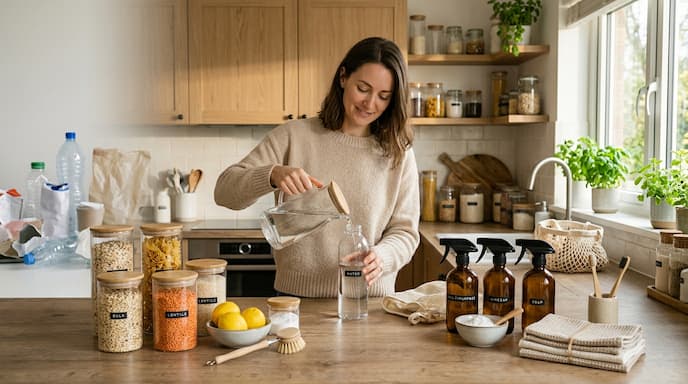
Why Eco-Friendly Living Is Also Budget-Friendly
Eco-friendly living often gets framed as something expensive, like you need fancy bamboo gadgets, organic everything, or high-end sustainable brands just to do your part. That perception keeps a lot of people from even trying. But when you actually break down daily habits and spending patterns, a different picture shows up. Many eco-friendly swaps that save you money are not premium upgrades at all—they’re simple replacements that reduce waste, cut unnecessary purchases, and lower recurring costs over time.
Think about how much money disappears into “convenience products.” Single-use items, disposable packaging, bottled drinks, and impulse purchases seem small individually, but they stack up quickly. The irony is that convenience often costs more while also creating more waste. Eco-friendly living flips that equation. Instead of constantly buying things you throw away, you invest in reusable or longer-lasting alternatives that quietly reduce monthly expenses.
There is also a behavioral shift that happens. When you start paying attention to waste, you naturally become more intentional with consumption. That awareness alone reduces overspending. You stop buying duplicates, you use what you already have more efficiently, and you start valuing durability over disposability. It’s less about restriction and more about removing financial leaks that were easy to ignore before.
The biggest misconception is that sustainability requires sacrifice. In reality, many eco-friendly habits reduce friction in daily life. Fewer shopping trips, fewer emergency replacements, and fewer impulse buys all translate into savings. Over time, those small decisions compound into noticeable financial impact without requiring drastic lifestyle changes.
The Hidden Cost of “Convenience” Products
Convenience products are designed to save time, but they often come with a hidden financial trade-off that adds up quietly. Items like paper towels, bottled water, single-use cleaning wipes, plastic bags, and disposable cutlery seem inexpensive in isolation, yet they are purchased repeatedly. That repetition is where the real cost hides.
For example, a single roll of paper towels might feel cheap at checkout, but if it’s being replaced weekly, the annual cost becomes surprisingly high. The same applies to bottled drinks or pre-packaged foods. You’re not just paying for the product—you’re paying for packaging, transportation, branding, and waste.
There’s also a psychological layer to convenience spending. Disposable items create a “use and replace” mindset, where it feels normal to constantly rebuy instead of maintain. That habit extends beyond household goods and can influence broader spending behavior, leading to more frequent but less intentional purchases overall.
Eco-friendly swaps interrupt that cycle. When reusable alternatives enter the picture, spending patterns shift from frequent small purchases to occasional long-term investments. Instead of buying paper towels every week, a set of reusable cloths can last for months or years. Instead of constantly replacing plastic bags, a few durable totes handle the job indefinitely.
The shift is not just environmental—it’s structural. It changes how money flows out of your household. And once you start noticing those patterns, it becomes clear that convenience is often one of the most expensive habits disguised as affordability.
How Sustainable Choices Reduce Long-Term Spending
Sustainable choices work on a simple principle: pay slightly more attention upfront to save significantly over time. The financial benefit doesn’t always show immediately, but it builds steadily as replacement cycles disappear.
Reusable products are a perfect example. A stainless steel water bottle may cost more than a pack of disposable bottles, but it eliminates hundreds of future purchases. Cloth shopping bags replace endless plastic bag fees or repeated purchases. Durable cleaning tools reduce the need for constant repurchasing of disposable alternatives.
Another important factor is reduced waste. When you buy fewer disposable items, you also reduce “forgotten spending”—those small, repeated purchases that don’t feel significant at the moment but accumulate into a large yearly total. Sustainable living naturally forces awareness of consumption, which leads to more mindful budgeting.
There is also a maintenance mindset that develops. Instead of replacing items immediately when they wear out, people start repairing, reusing, or repurposing. That shift alone can significantly reduce household expenses over time.
Eco-friendly living doesn’t require perfection. Even a few consistent swaps create a noticeable difference in spending patterns. The key is understanding that sustainability and financial savings are not separate goals—they often move in the same direction when approached thoughtfully.
Kitchen Swaps That Cut Waste and Bills
The kitchen is usually where money disappears the fastest without anyone really noticing. It’s not because of one big expense, but because of constant small purchases that repeat week after week—paper products, bottled drinks, packaged snacks, and single-use storage solutions. When you step back and look at it closely, the kitchen is often the center of both household spending and household waste. That’s exactly why eco-friendly kitchen swaps that save money tend to deliver some of the most immediate and noticeable results.
What makes kitchen habits so powerful is repetition. You don’t buy paper towels once—you buy them constantly. You don’t use cling film one time—you go through roll after roll. These are invisible habits because they’re so normalized. But once you replace them with reusable alternatives, the difference becomes surprisingly obvious in both your trash bin and your monthly budget.
There’s also a psychological shift that happens in the kitchen more than anywhere else in the home. Food preparation and cleaning are daily activities, which means small changes get reinforced repeatedly. Unlike occasional purchases, kitchen swaps become part of your routine, and routines are where long-term financial behavior is shaped.
The goal here isn’t to overhaul everything overnight. It’s to identify the highest-frequency waste points and replace them with durable, reusable, or lower-cost alternatives. Once that happens, savings begin to accumulate quietly in the background while your household becomes noticeably less wasteful.
Reusable Bottles vs Single-Use Plastics
One of the simplest yet most impactful swaps is replacing single-use plastic bottles with a reusable water bottle. At first glance, bottled water doesn’t seem like a major expense. It’s often just a dollar or two at a time. But that’s exactly how it becomes expensive—through repetition.
If someone buys bottled water daily, weekly, or even several times a week, the yearly cost can easily surpass the price of a high-quality stainless steel or BPA-free reusable bottle. And that doesn’t even account for flavored drinks, sodas, or sports drinks, which are even more expensive per serving.
Beyond the financial side, there’s also a convenience factor that often gets overlooked. A reusable bottle eliminates constant trips to the store, reduces clutter from packaging, and ensures you always have access to water without relying on store availability. It also encourages better hydration habits simply because it’s always within reach.
From an environmental standpoint, the impact is even more significant. Single-use plastic bottles contribute heavily to landfill waste and require energy-intensive production and transportation. Reusable bottles dramatically reduce that footprint while saving money at the same time.
The key is choosing a bottle that actually fits your lifestyle. If it’s durable, easy to clean, and convenient to carry, it naturally becomes part of your daily routine. Once that happens, buying bottled water starts to feel unnecessary rather than normal.
Cloth Towels vs Paper Towels
Paper towels are one of those household items that feel cheap and harmless until you track how often they’re actually used. Cleaning spills, drying hands, wiping surfaces, handling food prep—paper towels get used constantly, often without much thought. That’s why they quietly become one of the most consistent recurring costs in a kitchen.
Switching to cloth towels or reusable cleaning cloths changes that pattern immediately. Instead of buying a new roll every week or two, a small set of washable towels can last for months or even years with proper care. The upfront cost is slightly higher, but the long-term savings are significant.
There’s also a practical advantage that surprises many people: cloth towels are often more effective. They absorb more liquid, handle tougher messes, and don’t tear during use. This makes them more reliable for heavy-duty cleaning compared to thin disposable sheets.
The transition usually works best when both systems are used temporarily side by side. Many households start by using cloth towels for general cleaning and keeping paper towels only for specific situations. Over time, the reliance on disposables naturally decreases as cloth becomes the default option.
Laundry does increase slightly, but it replaces a continuous purchase cycle with a predictable, manageable routine. Instead of constantly restocking paper products, you’re simply washing and reusing what you already own.
Over time, this swap alone can significantly reduce household waste and recurring expenses. It’s a simple change, but it directly targets one of the most frequent sources of “invisible spending” in the kitchen.
Grocery Shopping Swaps for Everyday Savings
Grocery shopping is one of those routines that feels predictable, but it’s actually where a large portion of household spending quietly builds up over time. The interesting part is that most people don’t feel like they are overspending when they’re at the store. It’s only when monthly totals are reviewed that the pattern becomes obvious. This is exactly where eco-friendly grocery swaps that save money start making a real difference, because they reduce both unnecessary packaging costs and repeated impulse purchases while improving overall food quality.
The modern grocery environment is designed to encourage convenience. Individually wrapped items, pre-cut produce, ready-to-eat meals, and branded snacks all make life easier, but that convenience comes at a cost. Not just financially, but also in terms of waste and nutritional value. When you begin shifting toward more intentional shopping habits, you start noticing how much of your cart is made up of packaging rather than actual food.
A major benefit of eco-friendly grocery swaps is that they naturally push you toward whole foods. Whole foods are typically less processed, more filling, and more cost-effective per serving. That means you’re not only reducing waste—you’re also stretching your budget further without feeling deprived. Over time, this creates a healthier relationship with food and spending.
There’s also a behavioral shift that happens in grocery shopping. Instead of buying based on branding or convenience, you start buying based on ingredients and actual need. That shift alone reduces unnecessary purchases. You stop buying “just in case” items and start building meals around what you actually use consistently.
Buying in Bulk Instead of Packaged Goods
One of the most effective grocery-related eco-friendly swaps is moving from individually packaged items to bulk purchasing. At first, bulk buying might seem like it requires more money upfront, but in reality, it often reduces cost per unit significantly. The savings come from eliminating packaging, branding premiums, and distribution costs associated with smaller portions.
Think about items like rice, oats, beans, pasta, nuts, and grains. When purchased in small packaged quantities, you’re repeatedly paying for plastic wrapping, labeling, and marketing. In bulk, you pay primarily for the product itself. Over time, that difference adds up in a noticeable way.
Bulk buying also reduces shopping frequency. Instead of purchasing the same items every week, larger quantities last longer, which reduces trips to the store and minimizes impulse purchases. Fewer store visits often mean fewer unplanned additions to your cart, which indirectly supports better budgeting.
From an environmental perspective, bulk purchasing significantly reduces packaging waste. Fewer individual containers mean less plastic, cardboard, and mixed materials entering the waste stream. Many households also find that bulk storage systems, like glass jars or reusable containers, help keep kitchens more organized and visually clear.
The key to successful bulk buying is focusing on staples—foods you already eat regularly. It’s not about overstocking; it’s about replacing frequent small purchases with larger, more efficient ones. When done correctly, it simplifies meal planning and reduces both waste and cost without requiring major lifestyle changes.
Plant-Based Staples vs Processed Foods
Another powerful grocery swap involves shifting focus from heavily processed foods to plant-based staples like legumes, grains, vegetables, and fruits. This isn’t about adopting a strict diet—it’s about recognizing how much value is lost when food becomes more processed.
Processed foods tend to be more expensive per calorie and less satisfying in terms of fullness. They are engineered for taste and convenience, not long-term satiety. That means people often eat more of them or feel hungry again sooner, which leads to additional spending.
Plant-based staples, on the other hand, are naturally nutrient-dense and cost-effective. Foods like lentils, chickpeas, brown rice, potatoes, oats, and seasonal vegetables provide sustained energy and keep you fuller for longer periods. This reduces the need for frequent snacking or additional purchases between meals.
There’s also a compounding financial effect. When meals are built around simple ingredients rather than packaged combinations, the cost per meal decreases significantly. A pot of beans or a batch of roasted vegetables can be used in multiple meals throughout the week, reducing reliance on expensive ready-made options.
Over time, this swap also changes how you think about food. Instead of seeing meals as individual packaged experiences, you start seeing them as flexible combinations of basic ingredients. That mindset shift is where long-term savings really come from.
The goal is not to eliminate convenience entirely, but to reduce dependence on it. Even small changes—like replacing one processed meal per day with a simple home-cooked alternative—can create noticeable savings and reduce waste without feeling restrictive.
Home Cleaning Swaps That Reduce Toxic Chemicals
Cleaning is one of those household tasks that quietly drives both spending and chemical exposure higher than most people realize. Walk down any cleaning aisle and it’s easy to see why—there are separate products for glass, floors, bathrooms, kitchens, disinfecting, deodorizing, and stain removal. Each one comes in plastic packaging, often used quickly and replaced frequently. Over time, this creates a steady cycle of consumption that affects both your budget and the environment. This is where eco-friendly cleaning swaps that reduce toxic chemicals and save money become especially practical.
What many households don’t initially consider is that cleaning products are often doing more than just “cleaning.” They can introduce synthetic fragrances, harsh chemicals, and unnecessary additives into indoor air. While not all commercial cleaners are harmful in small use, the cumulative exposure in a closed home environment can be significant. Switching to simpler, safer alternatives reduces that load while also lowering ongoing costs.
There’s also a financial angle that becomes obvious once you step back. Most store-bought cleaners are essentially diluted solutions packaged in branded bottles. You are repeatedly paying for water, plastic packaging, marketing, and distribution. When you shift toward refillable or homemade alternatives, you cut out much of that overhead. The result is a cleaning routine that becomes simpler, cheaper, and often more effective.
Another benefit is control. When you make or choose simpler cleaning solutions, you know exactly what’s going into your home environment. That sense of transparency often encourages more mindful usage and reduces overconsumption of products that were previously used out of habit rather than necessity.
DIY Natural Cleaners vs Store-Bought Products
One of the most impactful swaps in household cleaning is moving from commercial products to DIY natural cleaners. Many effective cleaning solutions can be made using basic household ingredients like vinegar, baking soda, lemon juice, and water. These ingredients are inexpensive, widely available, and versatile enough to handle a wide range of cleaning tasks.
For example, a simple vinegar-and-water solution can clean glass, countertops, and many kitchen surfaces effectively. Baking soda works well as a gentle abrasive for scrubbing sinks, tubs, and stovetops. Lemon juice adds natural deodorizing and antibacterial properties while leaving a fresh scent without synthetic fragrances. When combined correctly, these ingredients can replace multiple store-bought products.
The cost difference is where things become especially noticeable. Instead of buying separate bottles for every cleaning task, a few inexpensive ingredients can cover most household needs for weeks or months. Over time, this significantly reduces recurring spending while also cutting down on plastic waste.
There’s also a reduction in clutter. Fewer specialized cleaning products mean fewer bottles under sinks, fewer replacements to track, and less confusion about what to use where. The simplicity itself becomes a form of efficiency.
It’s important to note that DIY cleaners are not about replacing every single commercial product in extreme situations, but about handling everyday cleaning tasks effectively. For most routine household maintenance, they are more than sufficient and often surprisingly efficient when used consistently.
Refillable Cleaning Systems
Another powerful eco-friendly swap is moving toward refillable cleaning systems. Instead of continuously buying new plastic bottles filled with cleaning solution, refill systems allow you to reuse the same durable container multiple times. You simply purchase concentrated refills or bulk cleaning solutions and mix or dispense them as needed.
This approach reduces both cost and waste simultaneously. The initial purchase of a quality reusable spray bottle or cleaning dispenser may be slightly higher, but it eliminates the need for constant repurchasing of full plastic containers. Over time, this significantly reduces household cleaning expenses.
Refill stations and concentrated cleaning pods are becoming more common, especially in eco-conscious stores and online platforms. These systems are designed to reduce packaging while maintaining effectiveness. Many concentrates require only water to activate, meaning you are primarily transporting and storing active ingredients rather than diluted liquid.
From a practical standpoint, refill systems also make storage easier. Instead of storing multiple bulky bottles, you keep a smaller number of durable containers and refill them as needed. This reduces clutter and simplifies cleaning routines.
Environmentally, the impact is also meaningful. Less plastic production, fewer transportation emissions, and reduced waste all contribute to a lower footprint. But from a purely financial perspective, the biggest advantage is long-term cost reduction through repeated reuse rather than repeated purchase.
Over time, many households find that switching to DIY and refillable systems not only lowers expenses but also makes cleaning feel more intentional and less wasteful. It turns a routine chore into a more streamlined and efficient system.
Energy-Saving Swaps That Lower Utility Bills
Energy bills are one of those household expenses that feel unavoidable, yet they fluctuate far more than most people realize. The difference between an average utility bill and a lower one often has less to do with major lifestyle changes and more to do with small, consistent habits and smarter product choices. This is where eco-friendly energy-saving swaps that lower utility bills become especially valuable, because they reduce waste while directly cutting monthly costs.
What makes energy savings unique compared to other eco-friendly swaps is that the benefits compound in real time. Every time you switch off an efficient appliance, use less electricity, or reduce unnecessary consumption, you are actively lowering your bill. Unlike some savings that take months to notice, energy efficiency starts reflecting in your monthly statement relatively quickly.
There’s also a mindset shift involved. Many households treat electricity, heating, and cooling as fixed costs, when in reality they are highly controllable. Simple adjustments—like switching to efficient lighting or improving daily usage habits—can make a noticeable difference without sacrificing comfort. The goal is not to live in discomfort, but to eliminate waste that has become invisible through habit.
Energy-efficient living also tends to encourage mindfulness. When you become more aware of how and when energy is used, you naturally begin making better decisions in other areas of consumption as well. This creates a ripple effect where financial savings and environmental responsibility reinforce each other.
LED Lighting vs Traditional Bulbs
One of the simplest and most effective swaps for reducing electricity costs is switching from traditional incandescent or halogen bulbs to LED lighting. At first glance, light bulbs don’t seem like a major expense driver. They are small, inexpensive items, so it’s easy to underestimate their long-term impact. But lighting is used daily and often for extended periods, which means efficiency differences accumulate quickly.
LED bulbs use significantly less energy to produce the same amount of light compared to older technologies. That means lower electricity consumption without any noticeable reduction in brightness or quality. In fact, many LED options offer adjustable color temperatures, allowing you to customize lighting for different rooms and moods while still saving energy.
Another major advantage is lifespan. Traditional bulbs burn out relatively quickly and require frequent replacement. LEDs, on the other hand, can last many times longer, which reduces both replacement costs and waste. Over time, this alone creates a meaningful financial difference.
There’s also less heat output with LED lighting. Older bulbs waste a significant portion of energy as heat, which can subtly increase cooling costs in warmer months. LEDs remain cooler, making them more efficient overall in multiple ways.
The transition to LED lighting is one of those rare swaps that requires minimal effort but delivers immediate and ongoing savings. Once installed, they quietly reduce electricity usage in the background without requiring any change in daily behavior.
Smart Power Strips and Energy Habits
While lighting is a major energy category, another hidden source of electricity waste comes from devices that continue drawing power even when they are not actively in use. This is known as “phantom load” or standby power consumption. Televisions, chargers, computers, gaming consoles, and kitchen appliances often continue using electricity even when switched off.
Smart power strips help solve this problem by automatically cutting power to devices that are not in use. Instead of manually unplugging multiple items, a smart strip detects when devices are idle and stops energy flow. This reduces unnecessary electricity usage without requiring constant attention.
The financial savings may seem small on a daily basis, but over months and years, they accumulate. Many households are surprised to learn how much energy is wasted simply by leaving devices plugged in all the time.
Beyond equipment, energy habits also play a major role. Simple behaviors like turning off lights when leaving a room, unplugging chargers, or running appliances only when full can significantly reduce consumption. These habits don’t require any financial investment, yet they directly reduce monthly bills.
Heating and cooling habits are another major factor. Adjusting thermostats slightly, using fans strategically, and improving insulation awareness can all contribute to lower energy use without sacrificing comfort.
The key idea is that energy efficiency is not about one major change—it’s about many small adjustments working together. When combined, they create a noticeable reduction in utility costs while also lowering overall environmental impact.
Bathroom Swaps for Sustainability and Savings
The bathroom is one of the smallest spaces in a home, but it often produces a surprisingly large amount of waste. From disposable hygiene products to plastic-heavy packaging and water usage habits, this room quietly contributes to ongoing monthly spending. The interesting part is that many of these costs are tied to routine behaviors that rarely get questioned. That’s exactly why eco-friendly bathroom swaps that save money and reduce waste can be so effective—they target frequent, repetitive purchases that add up over time without much notice.
Unlike larger lifestyle changes, bathroom swaps are usually simple and gradual. They don’t require a complete overhaul of habits overnight. Instead, small substitutions slowly replace disposable or high-waste items with durable, reusable, or lower-cost alternatives. Over time, these adjustments reduce both environmental impact and household spending in a way that feels almost effortless once established.
There is also a comfort and simplicity factor that comes with minimizing bathroom clutter. Fewer disposable products mean less frequent shopping, fewer plastic containers piling up, and a more streamlined daily routine. When products last longer or serve multiple purposes, decision fatigue decreases as well.
Another important aspect is awareness. Many bathroom products are used on autopilot—things like toothbrushes, soap bottles, razors, and personal care items are replaced without much thought. Once you start paying attention to usage cycles, it becomes clear how often money is spent on items designed to be thrown away quickly. Eco-friendly swaps help interrupt that cycle and introduce more intentional consumption.
Bamboo Toothbrushes vs Plastic Brushes
A simple but powerful switch in the bathroom is replacing traditional plastic toothbrushes with bamboo toothbrushes. At first glance, this might seem like a small change, but it represents a broader shift away from single-use plastics and frequent replacement cycles.
Plastic toothbrushes are typically replaced every few months, which means multiple units are purchased throughout the year per person. While each individual purchase is inexpensive, the cumulative cost over time is higher than most people realize, especially in households with multiple members. More importantly, these brushes contribute to long-term plastic waste that is difficult to recycle.
Bamboo toothbrushes offer a more sustainable alternative. The handle is made from a biodegradable material, which reduces environmental impact significantly. While the bristles are still often synthetic, the overall waste footprint is lower compared to fully plastic versions.
From a financial perspective, bamboo toothbrushes are generally comparable in price or slightly more upfront, but they do not increase long-term spending. In many cases, people become more mindful of replacement timing when using eco-friendly versions, which can subtly reduce unnecessary early replacements.
There’s also a psychological aspect to this swap. Using a more natural material often encourages more conscious consumption habits in other areas of personal care. It becomes less about automatic purchasing and more about intentional replacement cycles.
Bar Soap vs Liquid Soap Bottles
Another impactful bathroom swap is switching from liquid soap in plastic bottles to bar soap. Liquid soap is convenient, widely marketed, and often perceived as more hygienic, but it comes with recurring costs and significant packaging waste.
Each bottle of liquid soap includes plastic packaging, pumps, and often more water in its formulation. Once empty, the entire container is typically discarded or recycled inconsistently. Over time, households go through a large number of these bottles, which adds both cost and waste to the system.
Bar soap, on the other hand, is typically more concentrated, lasts longer, and requires minimal or no packaging. A single bar can often last significantly longer than a bottle of liquid soap depending on usage habits. This alone creates noticeable savings over time.
There is also less product waste with bar soap when used properly. Liquid soap can sometimes be dispensed in excess, leading to faster depletion. Bar soap usage tends to be more controlled, which naturally extends its lifespan.
From a sustainability standpoint, bar soap also reduces plastic consumption dramatically. Many versions come in paper or cardboard packaging, which is easier to recycle or compost compared to plastic pump bottles.
Transitioning between the two can take some adjustment, especially for those used to liquid dispensers, but many households find that once the switch is made, it becomes a simple and cost-effective routine change.
Overall, bathroom swaps may seem small individually, but they represent some of the most consistent savings opportunities in the home due to their repetitive nature. Over time, these changes quietly reduce both monthly spending and environmental impact without requiring major lifestyle disruption.
Clothing Swaps for a More Sustainable Wardrobe
Clothing is one of the most emotionally driven categories of spending in everyday life. Unlike groceries or utilities, clothing purchases are often tied to identity, confidence, trends, and social perception. That makes it easy to overlook how much money is actually spent over time on items that are worn briefly, replaced quickly, or rarely used at all. This is where eco-friendly clothing swaps that save money become especially powerful, because they challenge the cycle of constant consumption while encouraging more intentional wardrobe choices.
Fast fashion has reshaped how people buy clothes. Instead of purchasing fewer, higher-quality items, many wardrobes are filled with low-cost pieces designed for short-term use. These items may seem affordable individually, but frequent replacements and trend-driven purchases create a steady financial drain. The real cost is not just in money, but in clutter, waste, and the feeling of having “nothing to wear” despite a full closet.
Sustainable clothing swaps work by shifting focus from quantity to quality, and from impulse buying to long-term value. Instead of constantly adding new items, the emphasis moves toward choosing versatile pieces, maintaining what you already own, and exploring second-hand options. Over time, this creates a wardrobe that is simpler, more functional, and significantly less expensive to maintain.
There is also a psychological benefit. A more curated wardrobe reduces decision fatigue. When every piece has a purpose and fits well, getting dressed becomes easier and more satisfying. Instead of chasing trends, the focus shifts toward comfort, durability, and personal style consistency.
Quality Over Fast Fashion
One of the most impactful clothing swaps is choosing quality over fast fashion. Fast fashion items are typically designed to be cheap, trendy, and short-lived. They often use lower-grade materials and manufacturing processes that prioritize speed over durability. While the initial cost is appealing, these garments tend to wear out quickly, lose shape, fade, or tear after repeated washing.
High-quality clothing, on the other hand, is built with durability in mind. Stronger stitching, better fabrics, and more thoughtful construction allow garments to last significantly longer. Even if the upfront price is higher, the cost per wear is often much lower over time. A well-made jacket or pair of jeans worn regularly for years provides far more value than multiple cheaper replacements.
There’s also the factor of comfort and fit. Higher-quality materials tend to feel better on the skin and maintain their structure longer. That means clothes not only last longer but also continue to look and feel good after repeated use.
From a financial perspective, this shift reduces the frequency of shopping. Instead of constantly replacing worn-out items, you gradually build a stable wardrobe that doesn’t require regular rebuilding. That alone can significantly reduce yearly clothing expenses.
This approach also encourages more mindful purchasing decisions. Instead of buying based on impulse or trend cycles, each item becomes a more deliberate investment. Over time, this changes the relationship with clothing from disposable consumption to long-term use.
Second-Hand and Thrift Shopping
Another highly effective eco-friendly clothing swap is embracing second-hand and thrift shopping. This approach directly reduces both environmental impact and clothing expenses by extending the life cycle of existing garments.
Thrift stores, online resale platforms, and clothing swaps offer access to high-quality items at a fraction of their original cost. Many second-hand pieces are lightly used or even brand new with tags, making them excellent alternatives to buying retail. This allows individuals to access better-quality clothing without paying full price.
From a sustainability perspective, second-hand shopping reduces demand for new production. That means fewer resources used in manufacturing, less textile waste, and lower overall environmental impact. Extending the life of clothing is one of the simplest ways to reduce fashion-related waste.
There is also a unique advantage in variety. Second-hand shopping often includes styles and pieces that are no longer available in mainstream stores, allowing for more personalized wardrobe choices. This can help create a more unique style without relying on constant new purchases.
Financially, the savings can be substantial. Instead of paying retail prices, shoppers can often acquire entire outfits for the cost of a single new item. Over time, this dramatically reduces clothing expenses while still allowing for wardrobe updates when needed.
The key to successful thrift shopping is patience and intention. It may take time to find the right pieces, but the payoff is a wardrobe that is both affordable and sustainable.
Overall, clothing swaps represent one of the most effective long-term strategies for reducing unnecessary spending while building a more thoughtful and durable wardrobe. The shift is less about restriction and more about choosing value over volume.
Outdoor and Travel Eco Swaps
Spending time outdoors or traveling often feels like a break from routine, but it is also where some of the most wasteful consumption habits quietly show up. Convenience tends to increase on the go—single-use bottles, disposable cutlery, plastic bags, travel-sized toiletries, and cheap gear bought last minute all become part of the experience. These choices may feel small in the moment, but they accumulate into both environmental waste and unnecessary spending. This is where eco-friendly outdoor and travel swaps that save money become especially useful, because they simplify packing, reduce repeat purchases, and encourage more durable, long-term solutions.
Travel and outdoor activities often create a “temporary mindset,” where people are more likely to buy disposable or low-quality items because they feel short-term. The problem is that these items are replaced repeatedly, especially for frequent travelers, hikers, or commuters. Over time, the cost of constantly repurchasing travel-related convenience items becomes significant.
Eco-friendly swaps help shift that mindset from disposable to durable. Instead of buying items for one trip or one outing, the focus moves toward reusable gear that can handle repeated use. This not only reduces waste but also makes future travel easier and more organized. Packing becomes simpler when you already have reliable essentials instead of rebuilding your kit every time.
There is also a comfort factor. Higher-quality reusable items tend to perform better under real-world conditions. Leak-proof bottles, sturdy bags, durable utensils, and well-designed travel gear reduce stress while on the move. Instead of dealing with broken handles, spilled liquids, or forgotten disposable items, you rely on a stable set of tools that work consistently.
Reusable Shopping Bags vs Plastic Bags
One of the simplest and most effective outdoor and travel swaps is replacing single-use plastic bags with reusable shopping bags. Plastic bags are often treated as insignificant because they are inexpensive or even free in some places. However, that perception hides their real cost, which comes from constant replacement and environmental impact.
Each shopping trip often results in multiple plastic bags being used and discarded. Over weeks and months, this creates a continuous cycle of waste that is easy to overlook. Even when reused briefly, plastic bags tend to tear, get lost, or accumulate in drawers and eventually end up discarded anyway.
Reusable bags, by contrast, are designed for repeated use over long periods. A single sturdy bag can replace hundreds of plastic bags over its lifetime. While the upfront cost is slightly higher, the long-term savings come from eliminating repeated purchases or fees and reducing the need for constant replacements.
From a practical perspective, reusable bags are also more reliable. They hold more weight, are less likely to tear, and are easier to carry for longer periods. Many are foldable or compact, making them convenient to keep in a car, backpack, or purse for spontaneous use.
There is also a subtle behavioral benefit. When reusable bags become part of your routine, shopping becomes more intentional. You are less likely to make unplanned purchases because you are already prepared, which indirectly helps control spending.
Sustainable Travel Gear Choices
Travel gear is another area where eco-friendly swaps can significantly reduce both waste and long-term expenses. Many travelers rely on inexpensive, single-use, or low-quality items that are replaced frequently after wear and tear. While these options may seem budget-friendly at first, they often lead to repeated purchases over time.
Switching to durable, sustainable travel gear changes this pattern. Items like high-quality luggage, refillable toiletry containers, stainless steel water bottles, and reusable utensils can dramatically reduce the need for disposable alternatives. These items are designed for longevity, which means fewer replacements and less waste.
For example, instead of buying travel-sized plastic toiletries for every trip, refillable containers allow you to carry your preferred products repeatedly. Similarly, a durable water bottle eliminates the need for purchasing bottled drinks while traveling, which quickly adds up in cost.
Sustainable travel gear also improves organization. When you have reliable, reusable items that are always ready to go, packing becomes faster and more efficient. There is less need for last-minute purchases or forgetting essentials, both of which often lead to unnecessary spending during trips.
Another overlooked advantage is durability under stress. Travel involves movement, pressure, and frequent handling. Higher-quality items are better equipped to withstand these conditions, reducing the likelihood of damage or replacement mid-journey.
Over time, investing in sustainable travel gear creates a more streamlined travel experience. Instead of constantly replacing broken or disposable items, you build a dependable system that supports both convenience and cost savings.
Overall, outdoor and travel swaps are about shifting from short-term convenience to long-term reliability. Once that shift happens, both expenses and waste naturally decrease, while the overall travel experience becomes more organized and less stressful.
How to Transition Without Feeling Overwhelmed
Switching to a more sustainable lifestyle sounds simple in theory, but in practice it can feel like a lot all at once. There are new products, new habits, new routines, and a constant awareness of waste that most people were never taught to notice. That’s where many attempts at eco-friendly living lose momentum—not because the swaps are difficult, but because the transition feels too big to manage in one go. The key to success with eco-friendly swaps that save money long-term is not intensity, but pacing.
The reality is that no one builds a fully sustainable household overnight. Trying to replace everything at once usually leads to frustration, decision fatigue, and eventually reverting back to old habits. A more effective approach is gradual change that fits naturally into existing routines. When swaps are introduced slowly, they have time to become automatic rather than overwhelming.
Another important factor is mindset. Eco-friendly living is often mistakenly viewed as a strict rule system, but it works much better as a flexible upgrade process. Instead of focusing on what needs to be eliminated, it’s more sustainable to focus on what can be improved one step at a time. That shift removes pressure and makes the process feel more like progress than restriction.
There is also a learning curve involved. Understanding which swaps actually make a difference takes time. Not every eco-friendly product is essential, and not every change has the same financial impact. Prioritizing high-use areas like kitchen, cleaning, and energy usage helps create visible results early, which builds motivation to continue.
One-Swap-at-a-Time Strategy
One of the most effective ways to avoid overwhelm is the one-swap-at-a-time strategy. Instead of trying to overhaul your entire lifestyle, you focus on replacing just one habit or product category at a time. This approach makes the process manageable and allows each change to fully integrate before moving on to the next.
For example, you might start with something simple like replacing paper towels with reusable cloths. Once that becomes a normal part of your routine, you move on to another swap, such as switching to a reusable water bottle or reducing single-use plastic bags. Each step builds on the last, creating steady progress without pressure.
The benefit of this method is psychological as much as practical. Small wins create momentum. When you see a change working—whether it’s reduced waste, lower spending, or simpler routines—it reinforces motivation to continue. This prevents the burnout that often comes from trying to do everything at once.
It also allows time for adjustment. Every household has different habits, and not every swap fits perfectly right away. Some changes need tweaking, like finding the right reusable product or adjusting routines to make new habits stick. The one-swap approach gives space for that experimentation.
Over time, these individual changes accumulate into a complete system shift. What once felt like separate efforts gradually becomes a natural way of living, without needing constant conscious effort.
Building Long-Term Eco Habits
The real goal of eco-friendly living is not short-term change, but long-term habit formation. Once a behavior becomes a habit, it no longer feels like effort—it becomes automatic. That is where both environmental benefits and financial savings become consistent and sustainable.
Habit building starts with consistency rather than perfection. Repeating a small action regularly is far more effective than attempting large changes sporadically. For example, consistently using reusable bags when shopping will eventually eliminate the need to think about it at all. It simply becomes part of the routine.
Another important element is environmental design. Making sustainable choices easier than unsustainable ones increases the likelihood of sticking with them. Keeping reusable items visible, accessible, and convenient encourages regular use. If eco-friendly options are easier to reach than disposable ones, they naturally become the default choice.
Tracking progress can also help reinforce habits. Noticing reduced spending, less waste, or simpler routines provides tangible feedback that the changes are working. This reinforces motivation without needing external pressure.
Flexibility is equally important. Long-term sustainability does not require perfection. Occasional use of disposable or non-eco-friendly items does not undo progress. What matters is the overall direction, not isolated decisions.
Eventually, these habits stop feeling like conscious decisions and start feeling like normal behavior. At that point, sustainability is no longer something you “try” to do—it becomes how you naturally operate.
Conclusion
Eco-friendly swaps are often misunderstood as expensive lifestyle upgrades, but in reality, many of them are simple, practical changes that reduce both waste and long-term spending. From kitchen habits to grocery shopping, cleaning routines, energy use, clothing choices, and travel behavior, the most impactful changes come from replacing frequent, low-value consumption with durable, reusable alternatives.
What makes these swaps powerful is not just environmental benefit, but financial consistency. Small recurring purchases—paper products, bottled goods, disposable items, and fast-fashion replacements—add up quietly over time. When those habits are replaced with long-lasting solutions, the savings become steady and predictable.
The transition does not require perfection or dramatic change. It works best as a gradual process, where each swap builds on the last until a more efficient and sustainable system naturally forms. Over time, the combination of reduced waste, simplified routines, and lower spending creates a lifestyle that is both practical and easier to maintain.
FAQs
1. Are eco-friendly swaps actually cheaper long-term?
Yes. Most reusable or durable alternatives reduce repeated purchases, which leads to lower overall spending over time.
2. Do I need to replace everything at once to be eco-friendly?
No. Gradual changes are more effective and sustainable. Starting with one or two swaps is often the best approach.
3. What are the easiest eco-friendly swaps to start with?
Reusable water bottles, shopping bags, cloth towels, and switching to LED bulbs are simple and high-impact starting points.
4. Do eco-friendly products always cost more upfront?
Not always, but some do. However, they typically save money over time because they last longer and reduce replacement costs.
5. How do eco-friendly swaps reduce waste?
They replace single-use items with reusable alternatives, which significantly lowers the amount of disposable packaging and products thrown away.