Food labels can feel like a maze. One side promises “clean eating” with green leaves and earthy packaging, while the other focuses on affordability and availability. Somewhere between the two sits a long-running debate that has only grown louder over the years: organic versus non-organic food. People argue about health benefits, environmental impact, taste differences, and even moral responsibility. But the truth is more layered than most headlines suggest.
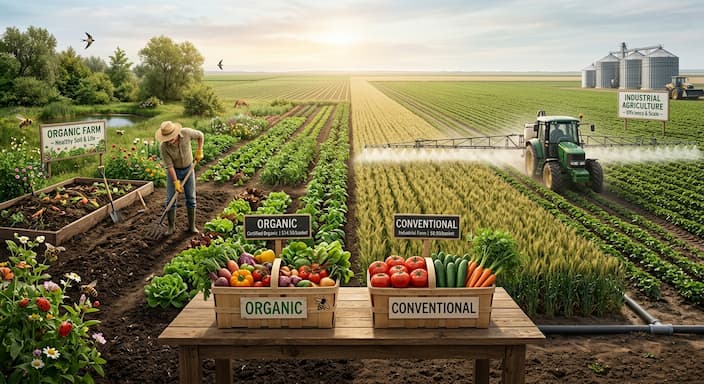
At its core, this discussion is not just about food—it’s about farming systems, economics, and how modern society balances health, sustainability, and practicality. Organic food is often marketed as pure, natural, and safer, while non-organic (conventional) food is seen as industrial, efficient, and sometimes controversial. Yet both systems feed billions of people every day, and both have strengths and weaknesses that are often misunderstood.
To really understand what separates these two categories, it’s important to look beyond marketing claims and into how food is actually grown, processed, and delivered to your plate. That means examining farming practices, pesticide use, nutritional data, environmental effects, and even the cost factor that influences what ends up in your shopping cart.
This breakdown is not about declaring a “winner.” Instead, it’s about clarity—removing confusion and replacing it with context. Because once you understand how both systems work, the decision becomes less about fear or hype and more about informed choice. And that shift in perspective changes everything about how you see your food.
Understanding Organic and Non-Organic Foods
Before comparing benefits or risks, it’s necessary to understand what “organic” and “non-organic” actually mean. These terms are often used loosely in advertising, which creates confusion for consumers. In reality, they are defined by specific agricultural standards, not just vague ideas of natural versus artificial. The difference begins at the farm level and extends all the way to certification, handling, and labeling.
Organic food is produced under regulated guidelines that restrict or limit the use of synthetic pesticides, herbicides, genetically modified organisms (GMOs), and certain fertilizers. Farmers must follow approved methods that focus on soil health, biodiversity, and ecological balance. These standards vary slightly by country, but the core principles remain similar: reduce chemical inputs and rely more on natural processes.
Non-organic food, often called conventional food, follows a different set of rules. It allows the use of synthetic chemicals, modern agricultural technology, and genetically modified crops where permitted. The main goal is often efficiency—producing large quantities of food at lower cost to meet global demand.
Both systems are legitimate and regulated. Neither is inherently “fake” or unsafe. The difference lies in philosophy and method rather than absolute quality. One prioritizes ecological processes, while the other prioritizes scale and productivity. Understanding this distinction is the foundation for evaluating everything else in the organic vs. non-organic debate.
What Does “Organic” Really Mean?
The term “organic” is often associated with images of small farms, natural fertilizers, and chemical-free produce, but the actual definition is more structured. Organic certification is a legal framework, not just a lifestyle choice. Farmers must follow strict guidelines regarding soil treatment, pest control, and seed sourcing to maintain organic status. This includes avoiding most synthetic pesticides and fertilizers, though certain naturally derived substances may still be permitted under regulation.
Organic farming also emphasizes crop rotation, composting, and biological pest control. These methods aim to maintain long-term soil fertility instead of relying on chemical inputs. However, it’s important to note that “organic” does not mean pesticide-free. It simply means the pesticides used must meet approved organic standards, which are generally derived from natural sources.
Another key aspect is certification. A farm cannot label its products as organic without passing inspections and maintaining detailed records. This adds credibility but also increases production costs, which is one reason organic foods are often more expensive.
Ultimately, “organic” refers to a regulated farming approach that tries to work with natural systems rather than override them. It is a method, not a guarantee of perfection, and understanding that distinction helps set realistic expectations.
What Does “Non-Organic” Mean?
Non-organic food is often misunderstood as inferior or unsafe, but in reality, it simply refers to conventional farming methods that do not follow organic certification standards. These systems use a combination of modern agricultural tools, including synthetic fertilizers, pesticides, and sometimes genetically modified seeds, depending on regional regulations.
The primary focus of non-organic farming is productivity. With a growing global population, conventional agriculture aims to produce large yields efficiently and affordably. This often involves technological advancements such as precision farming, irrigation systems, and chemical crop protection to maximize output and reduce crop loss.
Unlike organic farming, non-organic systems are not restricted from using most synthetic inputs. This flexibility allows farmers to protect crops more aggressively against pests and diseases, which can significantly reduce waste. However, it also raises concerns among consumers about chemical residues and environmental impact.
Despite criticism, conventional farming is responsible for feeding the majority of the world’s population. Without it, food prices would likely be much higher, and supply chains less stable. Understanding non-organic farming requires acknowledging its role in global food security rather than viewing it solely through a negative lens.
How Organic Farming Works
Organic farming operates on the principle of ecological balance. Instead of relying heavily on synthetic inputs, it uses natural systems to maintain soil fertility, control pests, and support plant growth. This approach often requires more planning and labor, but it aims to create a more sustainable long-term farming environment.
One of the key ideas behind organic farming is that soil is not just a medium for growing crops—it is a living ecosystem. Farmers who follow organic practices focus on improving soil health through composting, crop rotation, and natural fertilizers like manure or plant-based compost. This helps maintain nutrient levels without synthetic chemicals.
Pest management in organic farming is also more biological in nature. Instead of using chemical pesticides as a first response, farmers may introduce beneficial insects, use natural repellents, or rely on crop diversity to reduce pest outbreaks. This creates a more balanced ecosystem but can also make yields more unpredictable.
Organic farming is often seen as environmentally friendly, but it is not without challenges. Lower yields, higher labor requirements, and stricter certification rules can make it more difficult to scale. Still, its emphasis on sustainability continues to attract both farmers and consumers who prioritize environmental impact.
Soil Management Practices
Soil management is the foundation of organic farming. Healthy soil is treated as a living system filled with microorganisms, organic matter, and nutrients that work together to support plant growth. Instead of relying on synthetic fertilizers, organic farmers focus on building soil fertility naturally over time.
Common practices include composting, green manure, and crop rotation. Composting adds decomposed organic material back into the soil, enriching it with nutrients. Green manure involves planting specific crops that are later plowed back into the soil to improve its structure and nutrient content. Crop rotation prevents soil depletion by alternating different types of crops in the same field.
These methods help maintain long-term soil productivity, but they require patience. Unlike synthetic fertilizers that provide immediate nutrient boosts, organic soil improvements develop gradually. This slower process is one of the trade-offs of organic farming, but it is also what contributes to its sustainability claims.
Pest Control Without Synthetic Chemicals
Pest control in organic farming relies on ecological balance rather than chemical intervention. Instead of eliminating all insects, organic farmers aim to manage pest populations in a way that minimizes damage while preserving beneficial species.
Techniques include introducing natural predators like ladybugs, using neem oil or other plant-based sprays, and planting companion crops that repel pests. Physical barriers such as nets or traps are also commonly used.
While these methods can be effective, they often require more monitoring and intervention compared to synthetic pesticides. Crop losses may be higher in some cases, which can impact yield stability. However, supporters argue that this approach reduces chemical exposure and supports biodiversity in agricultural ecosystems.
How Conventional Farming Works
Conventional farming, also known as non-organic agriculture, is built around one central goal: producing as much food as possible in the most efficient way possible. When you look at modern supermarket shelves overflowing with fruits, vegetables, grains, and packaged goods year-round, you are seeing the result of this system working at scale. It is a highly engineered approach to food production that relies on scientific advancements, industrial tools, and chemical inputs to keep crops growing consistently despite weather challenges, pests, and soil limitations.
Unlike organic farming, which emphasizes ecological balance and slower, natural cycles, conventional farming prioritizes predictability. Farmers operate in a system where synthetic fertilizers restore soil nutrients quickly, pesticides protect crops from destruction, and herbicides reduce competition from weeds. These tools allow farmers to maintain large yields even in challenging conditions, which is essential for feeding billions of people globally.
However, this efficiency comes with trade-offs. The heavy reliance on external inputs can lead to concerns about environmental degradation, soil depletion, and chemical residues. At the same time, supporters argue that without these methods, global food production would not be able to meet current demand. The truth sits in the tension between productivity and sustainability.
Conventional farming is not static—it continues to evolve with precision agriculture, genetic research, and improved chemical formulations designed to reduce harm while increasing output. Understanding how this system works requires moving beyond simple “good vs bad” thinking and recognizing it as a complex response to global food needs.
Use of Synthetic Chemicals in Agriculture
Synthetic chemicals are one of the most defining features of conventional farming. These include fertilizers, pesticides, herbicides, and fungicides that are designed to enhance plant growth and protect crops from threats. Synthetic fertilizers, for example, provide essential nutrients like nitrogen, phosphorus, and potassium in concentrated forms that plants can absorb quickly. This allows crops to grow faster and more predictably than they would using natural soil enrichment alone.
Pesticides and herbicides play a different role. Pesticides are used to protect crops from insects and diseases that could destroy entire harvests, while herbicides control unwanted plants that compete for resources like sunlight and water. Without these tools, farmers would often face significant crop losses, especially in large-scale production systems.
However, the use of synthetic chemicals has sparked ongoing debate. Critics worry about pesticide residues on food and the potential long-term effects of exposure, even in small amounts. There are also environmental concerns, such as chemical runoff affecting water systems and reducing biodiversity in surrounding ecosystems.
On the other hand, regulatory agencies in many countries set strict limits on chemical usage and residue levels in food. This means that conventional produce on the market is generally tested and monitored to ensure it falls within safety guidelines. While opinions differ on how strict those limits should be, the system is designed to balance productivity with consumer safety.
Yield and Efficiency Focus
The core advantage of conventional farming is its ability to produce high yields efficiently. In a world where population growth continues to increase food demand, this system plays a critical role in preventing shortages. By using synthetic inputs, advanced machinery, and optimized farming techniques, conventional agriculture can produce significantly more food per acre compared to traditional or organic methods.
Efficiency is not just about quantity—it is also about cost. Large-scale production helps reduce the price of food, making it more accessible to a wider population. This is particularly important in urban areas and developing regions where affordability is a major concern. Without this system, many staple foods would likely be far more expensive and less widely available.
However, the focus on yield can sometimes lead to intensive farming practices that strain natural resources. Continuous monocropping, heavy fertilizer use, and soil overexploitation are common challenges. To address these issues, modern agriculture is increasingly integrating technology such as satellite monitoring, automated irrigation, and soil sensors to improve efficiency while reducing environmental impact.
Conventional farming, therefore, is constantly balancing two pressures: producing enough food to meet demand and minimizing long-term environmental consequences. It is not a perfect system, but it is a highly adaptive one that continues to evolve in response to global needs.
Nutritional Differences Between Organic and Non-Organic Foods
One of the most debated topics in the organic vs. non-organic discussion is whether there is a real nutritional difference between the two. Many consumers assume that organic food is automatically more nutritious, while others believe both types are essentially the same once they reach the plate. The scientific reality is more nuanced and often surprising.
Multiple studies have compared the nutrient content of organic and conventional produce, examining vitamins, minerals, antioxidants, and protein levels. In many cases, the differences are small or inconsistent. Some research shows slightly higher levels of certain antioxidants in organic crops, while others find no significant nutritional advantage. The variation often depends more on factors like soil quality, crop variety, and freshness rather than farming method alone.
One important point often overlooked is that nutrition is influenced heavily by post-harvest handling. How long food is stored, how it is transported, and how fresh it is when consumed can have a greater impact on nutrient levels than whether it was grown organically or conventionally.
This does not mean there are no differences at all. It simply means that the idea of organic food being dramatically more nutritious is not strongly supported by consistent scientific evidence. Instead, nutrition tends to overlap significantly between the two systems, with only minor variations in specific cases.
Understanding this helps shift the conversation away from assumptions and toward evidence-based thinking. Nutrition is important, but it is only one part of the broader comparison between organic and non-organic food systems.
What Research Says About Vitamins and Minerals
Scientific studies examining vitamin and mineral content in organic and conventional foods have produced mixed results. Some analyses suggest that organic produce may contain slightly higher levels of certain nutrients, such as vitamin C, magnesium, or iron. However, these differences are often small and not consistent across all crops.
For example, one batch of organic spinach might show higher iron content than conventional spinach, while another study might find no meaningful difference at all. This inconsistency suggests that environmental conditions, soil composition, and farming practices play a larger role than the organic label itself.
Mineral content is especially influenced by soil health. If conventional farms maintain well-balanced soil through fertilization and crop management, their produce can match or even exceed organic nutrient levels. Similarly, organic farms with poor soil conditions may produce nutrient levels comparable to or lower than conventional farms.
The key takeaway from research is that there is no universal nutritional superiority. Instead, both systems can produce highly nutritious food depending on how they are managed. This challenges the common belief that “organic automatically means healthier.”
Myths vs Reality in Nutrition Claims
A major myth in the organic debate is that organic food is always significantly healthier. This idea is often reinforced by marketing rather than scientific evidence. While organic food does have certain advantages in terms of farming practices, those benefits do not automatically translate into dramatically higher nutritional value.
Another common misconception is that non-organic food is “empty” or heavily processed in its natural state. In reality, conventional fruits, vegetables, and grains are nutritionally similar to their organic counterparts when harvested and consumed fresh.
The reality is that diet quality depends far more on overall food choices than on whether those foods are organic or not. Eating a variety of fruits, vegetables, whole grains, and proteins has a much larger impact on health than focusing exclusively on production methods.
Understanding these myths helps reduce confusion and allows consumers to make more balanced decisions based on evidence rather than fear or assumptions.
Health Impacts of Organic vs Non-Organic Foods
When people choose between organic and non-organic food, health is often the biggest concern. Many assume that organic food is inherently safer, while conventional food is associated with chemical exposure. The reality is more complex and depends on exposure levels, regulatory standards, and individual dietary patterns.
One of the main concerns involves pesticide residues. Conventional farming uses synthetic pesticides, and traces of these substances can sometimes remain on produce. However, regulatory agencies set strict limits on what is considered safe for human consumption, and routine testing ensures that most food falls well below these thresholds.
Organic food also uses pesticides, but they are typically derived from natural sources. While “natural” sounds safer, it does not automatically mean harmless. Some organic-approved pesticides can still pose risks if misused.
Long-term studies on health outcomes have not found strong evidence that eating organic food significantly reduces disease risk compared to conventional food. However, reducing pesticide exposure in general is still considered a reasonable precaution for some consumers, especially when it comes to certain high-residue crops.
Pesticide Residue Concerns
Pesticide residue is one of the most frequently discussed topics in food safety debates. Conventional produce can contain trace amounts of pesticide residues, but these levels are typically monitored and regulated to remain within safe limits established by health authorities.
Washing and proper handling of fruits and vegetables can further reduce these residues. Peeling certain produce items can also lower exposure, although it may remove some nutrients in the process.
Organic produce generally has lower pesticide residues, but it is not completely residue-free. Natural pesticides are still used, and environmental contamination can occasionally affect crops.
The key issue is exposure level. Most scientific assessments suggest that the levels found in food are far below thresholds known to cause harm in humans. However, some consumers prefer to minimize exposure as much as possible, which is one reason organic food remains popular.
Long-Term Health Studies
Long-term studies comparing organic and conventional diets have not found definitive evidence that one is significantly healthier than the other in terms of major disease outcomes. Some research suggests potential benefits of organic diets in reducing exposure to certain pesticides, but direct links to improved long-term health outcomes remain inconclusive.
This does not mean the debate is irrelevant—it simply highlights the complexity of studying diet and health. Many other factors, including lifestyle, genetics, and overall diet quality, play a much larger role in long-term health than farming methods alone.
Environmental Impact Comparison
The environmental conversation around organic and non-organic farming is where the debate often becomes emotionally charged. It’s easy to understand why—food production is deeply tied to land use, water systems, biodiversity, and climate change. But the reality is not a simple story of “good” versus “bad.” Instead, it is a comparison of two systems with very different trade-offs, each solving one environmental problem while sometimes creating another.
Organic farming is often viewed as the more environmentally friendly option because it avoids most synthetic chemicals and focuses on natural cycles. In theory, this reduces pollution, supports biodiversity, and improves soil health over time. On the other hand, conventional farming is sometimes criticized for its reliance on chemical inputs and intensive land use. However, it also produces significantly higher yields, which means less land may be needed overall to grow the same amount of food.
This creates an interesting paradox: a system that uses fewer chemicals per acre is not always the system with the lowest overall environmental footprint. If organic farming requires more land to produce the same output, it may indirectly lead to deforestation or habitat conversion in some regions. Meanwhile, conventional farming’s efficiency can reduce land pressure but increase chemical usage.
Environmental impact cannot be measured by a single metric. It requires looking at soil health, greenhouse gas emissions, water usage, biodiversity, and land efficiency together. When all these factors are considered, the comparison becomes far more balanced and less ideological than many public discussions suggest.
Soil Biodiversity and Ecosystem Health
Soil health is one of the strongest arguments in favor of organic farming. Healthy soil is not just dirt—it is a living ecosystem filled with bacteria, fungi, insects, and organic matter that all work together to support plant growth. Organic farming practices such as composting, crop rotation, and reduced chemical use are designed to preserve and enhance this underground ecosystem.
Over time, these practices can improve soil structure, increase water retention, and support microbial diversity. This can make farms more resilient to droughts and extreme weather conditions. In many studies, organically managed soils show higher levels of organic matter compared to heavily industrialized farmland.
However, conventional farming is not static in this area. Modern agricultural science has introduced conservation tillage, cover cropping, and precision fertilization techniques that aim to reduce soil damage while maintaining high yields. These methods are increasingly used to address soil degradation concerns without fully abandoning conventional systems.
The key point is that soil health depends more on how land is managed than whether it is labeled organic or non-organic. Both systems can either harm or improve soil depending on the practices used. Organic farming tends to prioritize soil regeneration by default, while conventional farming is increasingly integrating soil-friendly innovations.
Carbon Footprint and Sustainability
Carbon emissions are another major factor in the organic versus non-organic debate. Agriculture contributes to greenhouse gas emissions through fertilizer production, transportation, machinery use, and land-use changes. Organic farming avoids synthetic fertilizer production, which can reduce certain emissions. However, lower yields can sometimes offset these benefits.
Because organic farming often produces less food per acre, more land may be required to produce the same total output. This can indirectly increase carbon emissions if additional land needs to be cleared or managed. Conventional farming, by producing more food on less land, can sometimes achieve lower emissions per unit of food produced.
At the same time, conventional agriculture relies heavily on nitrogen-based fertilizers, which can release nitrous oxide—a potent greenhouse gas. This is one of its biggest environmental challenges.
Sustainability, therefore, is not determined by the farming label alone. It depends on efficiency, land use, fertilizer management, and transportation systems. Some of the most sustainable farms today combine elements of both systems, using organic principles for soil health while applying conventional tools for efficiency.
Cost Differences and Accessibility
One of the most immediate and noticeable differences between organic and non-organic food is price. Walk into any grocery store, and organic products are often significantly more expensive. This price gap is not random—it is the result of differences in production methods, certification requirements, labor intensity, and yield efficiency.
Organic farming generally requires more manual labor, more time-intensive practices, and stricter certification processes. Farmers must meet specific standards and undergo inspections, all of which add to production costs. Additionally, lower yields mean fewer products are produced per acre, which increases the cost per unit.
Conventional farming, by contrast, benefits from economies of scale. Higher yields, mechanization, and synthetic inputs allow farmers to produce large quantities of food at lower cost. This efficiency is passed down the supply chain, making non-organic food more affordable for consumers.
However, affordability is not just an economic issue—it is also a social one. For many families, choosing organic food exclusively is simply not realistic within their budget. This raises an important question: is it better to eat a varied diet with some conventional food, or limit access due to cost?
There is no universal answer, but most nutrition experts agree that eating more fruits and vegetables—regardless of whether they are organic or not—is far more important than focusing exclusively on labels. Accessibility plays a key role in public health, and conventional farming helps ensure that nutritious food remains widely available.
How to Make the Right Choice for Your Lifestyle
Choosing between organic and non-organic food is less about picking a “right side” and more about understanding personal priorities. Some people value reduced pesticide exposure and environmental considerations, while others prioritize affordability and accessibility. Both perspectives are valid, and neither requires extreme decision-making.
A practical approach is balance. Many consumers choose to buy organic versions of certain foods while purchasing conventional options for others. This often depends on factors like price, availability, and personal comfort level with pesticide exposure. There is no requirement to fully commit to one system.
Another useful strategy is focusing on overall diet quality. Eating more whole foods—fruits, vegetables, legumes, and minimally processed items—has a much greater impact on health than strictly choosing organic products. Freshness, variety, and nutritional balance matter more than labels alone.
It also helps to understand that food safety systems in most developed countries are highly regulated. Both organic and conventional foods are generally considered safe for consumption when properly handled and prepared.
Ultimately, the most sustainable choice is the one that fits consistently into your lifestyle. Consistency matters more than perfection when it comes to long-term health and nutrition.
Conclusion
The debate between organic and non-organic food is often presented as a simple choice between “natural purity” and “industrial farming,” but reality does not fit neatly into that framing. Both systems are complex, widely used, and essential to feeding the global population. Each comes with advantages and trade-offs that depend on context rather than absolute superiority.
Organic farming emphasizes soil health, ecological balance, and reduced synthetic chemical use, but it often comes with higher costs and lower yields. Conventional farming prioritizes efficiency, affordability, and large-scale production, but relies more heavily on synthetic inputs and intensive practices. Neither system is perfect, and both continue to evolve with modern science and sustainability efforts.
Understanding this topic is less about choosing sides and more about recognizing nuance. Food choices are shaped by science, economics, environment, and personal values all at once. Once that complexity is acknowledged, the decision becomes less about fear-driven labels and more about informed, practical living.
FAQs
1. Is organic food healthier than non-organic food?
Not significantly in most studies. Nutritional differences are usually small and depend more on freshness and soil conditions than farming method.
2. Does organic food have no pesticides?
No. Organic farming uses natural pesticides, but they are regulated and generally different from synthetic ones used in conventional farming.
3. Is non-organic food safe to eat?
Yes. Regulatory agencies set strict safety limits on pesticide residues, and most conventional food falls well within those limits.
4. Why is organic food more expensive?
It costs more to produce due to lower yields, labor-intensive methods, and certification requirements.
5. Which is better for the environment: organic or non-organic farming?
It depends on the metric. Organic farming may improve soil health, while conventional farming often uses less land per unit of food produced.